Affiliate notice

Affiliate links may be included in posts, as on sidebar ads, for which compensation may be received.

Tuesday, April 26, 2011

Paul Revere's Ride


Before we say goodbye to April, we might recall that solid, rhythmic dirge, “On the eighteenth of April, in Seventy-Five/Hardly a man is now alive/Who remembers that famous day and year.”

Many of us remember that famous day and year only because of Henry Wadsworth Longfellow’s poem “Paul Revere’s Ride”. We coming into several months (and years, probably), of Civil War commemorations on the 150th anniversary of that war, but one thing we might also remember is that the turmoil between the North and South, even before the war actually started, coincided with a renewed interest in the American Revolution. Longfellow’s poem, published in 1860, was part of this nostalgia for a time when American ideals seemed more cohesive and the country moved as one with a greater sense of purpose.

The Old North Church

It may not have really been that way, of course. The days of the Revolution were just as fraught with disagreement and tension among Americans as in later days, but nostalgia always makes us think the olden days were better, and people were better.

Paul Revere, though a man of some repute in Boston for being a craftsman, businessman, solid citizen, and like many of his generation, a Revolutionary War vet, really didn’t come into the national pantheon of American heroes until Longfellow made him a hero in his poem.

His deed was to be sent by Dr. Joseph Warren, on the night of April 18, 1775, to Lexington to warn Samuel Adams and John Hancock that they were about to be arrested by British soldiers. Revere was rowed across the Charles River from Boston to Charleston by two other revolutionaries, borrowed a horse, saw that the signal of two lanterns hanging in the church bell tower meant the British were going to cross into Cambridge over the water route rather than on the march out Boston Neck, and delivered the warning.

Then a couple of other riders joined in spreading the alarm, William Dawes, and Dr. Samuel Prescott. The trio decided to continue on to Concord. All three of them were arrested by British soldiers, and Prescott and Dawes managed to escape, but Paul Revere was held for a time, then released, though they confiscated his borrowed horse.

We don’t hear too much about Dawes or Dr. Prescott, not having poems written about them, but Dawes’ part in the adventure is recounted here on his grave marker at the King’s Chapel Burial Ground in Boston.


Paul Revere’s grave marker, at the Old Granary Burial Ground is without any such description, but you don’t need a commemorative marker when Longfellow writes a poem about you.

Oh, and he’s also got this equestrian statue, and that’s the Old North Church in the background. As you can see, he still rides to spread the alarm to every Middlesex village and farm.

Have a look here for more on Paul Revere at this website. Longfellow’s poem is below, for we can never think of Paul Revere without thinking of the poem. 

Paul Revere's Ride
Henry Wadsworth Longfellow, 1860.


LISTEN, my children, and you shall hear
Of the midnight ride of Paul Revere,
On the eighteenth of April, in Seventy-Five;
Hardly a man is now alive
Who remembers that famous day and year.


He said to his friend, "If the British march
By land or sea from the town to-night,
Hang a lantern aloft in the belfry arch
Of the North Church tower, as a signal light, --
One, if by land, and two, if by sea;
And I on the opposite shore will be,
Ready to ride and spread the alarm
Through every Middlesex village and farm,
For the country-folk to be up and to arm."


Then he said "Good-night!" and with muffled oar
Silently rowed to the Charlestown shore,
Just as the moon rose over the bay,
Where swinging wide at her moorings lay
The Somerset, British man-of-war;
A phantom ship, with each mast and spar
Across the moon like a prison-bar,
And a huge black hulk, that was magnified
By its own reflection in the tide.


Meanwhile, his friend, through alley and street
Wanders and watches with eager ears,
Till in the silence around him he hears
The muster of men at the barrack door,
The sound of arms, and the tramp of feet,
And the measured tread of the grenadiers,
Marching down to their boats on the shore.


Then he climbed the tower of the Old North Church,
By the wooden stairs, with stealthy tread,
To the belfry-chamber overhead,
And startled the pigeons from their perch
On the somber rafters, that round him made
Masses and moving shapes of shade, --
By the trembling ladder, steep and tall,
To the highest window in the wall,
Where he paused to listen and look down
A moment on the roofs of the town,
And the moonlight flowing over all.


Beneath, in the churchyard, lay the dead,
In their night-encampment on the hill,
Wrapped in silence so deep and still
That he could hear, like a sentinel's tread,
The watchful night-wind, as it went
Creeping along from tent to tent,
And seeming to whisper, "All is well!"


A moment only he feels the spell
Of the place and the hour, the secret dread
Of the lonely belfry and the dead;
For suddenly all his thoughts are bent
On a shadowy something far away,
Where the river widens to meet the bay, --
A line of black, that bends and floats
On the rising tide, like a bridge of boats.


Meanwhile, impatient to mount and ride,
Booted and spurred, with a heavy stride
On the opposite shore walked Paul Revere.
Now he patted his horse's side,
Now gazed on the landscape far and near,
Then, impetuous, stamped the earth,
And turned and tightened his saddle-girth;
But mostly he watched with eager search
The belfry-tower of the Old North Church,
As it rose above the graves on the hill,
Lonely and spectral and somber and still.


And lo! as he looks, on the belfry's height
A glimmer, and then a gleam of light!
He springs to the saddle, the bridle he turns,
But lingers and gazes, till full on his sight
A second lamp in the belfry burns!


A hurry of hoofs in a village street,
A shape in the moonlight, a bulk in the dark,
And beneath, from the pebbles, in passing, a spark
Struck out by a steed flying fearless and fleet:
That was all! And yet, through the gloom and the light,
The fate of a nation was riding that night;
And the spark struck out by that steed, in his flight,
Kindled the land into flame with its heat.


He has left the village and mounted the steep,
And beneath him, tranquil and broad and deep,
Is the Mystic, meeting the ocean tides;
And under the alders that skirt its edge,
Now soft on the sand, now loud on the ledge,
Is heard the tramp of his steed as he rides.


It was twelve by the village clock,
When he crossed the bridge into Medford town.
He heard the crowing of the cock,
And the barking of the farmer's dog,
And felt the damp of the river fog,
That rises after the sun goes down.


It was one by the village clock,
When he galloped into Lexington.
He saw the gilded weathercock
Swim in the moonlight as he passed,
And the meeting-house windows, blank and bare,
Gaze at him with a spectral glare,
As if they already stood aghast
At the bloody work they would look upon.


It was two by the village clock,
When he came to the bridge in Concord town.
He heard the bleating of the flock,
And the twitter of birds among the trees,
And felt the breath of the morning breeze
Blowing over the meadows brown.


And one was safe and asleep in his bed
Who at the bridge would be first to fall,
Who that day would be lying dead,
Pierced by a British musket-ball.


You know the rest. In the books you have read,
How the British regulars fired and fled, --
How the farmers gave them ball for ball,
From behind each fence and farm-yard wall,
Chasing the red-coats down the lane,
Then crossing the fields to emerge again
Under the trees at the turn of the road,
And only pausing to fire and load.


So through the night rode Paul Revere;
And so through the night went his cry of alarm
To every Middlesex village and farm, --
A cry of defiance and not of fear,
A voice in the darkness, a knock at the door,
And a word that shall echo forevermore!


For, borne on the night-wind of the Past,
Through all our history, to the last,
In the hour of darkness and peril and need,
The people will waken and listen to hear
The hurrying hoof-beat of that steed,
And the midnight-message of Paul Revere.

Tuesday, April 19, 2011

Lakewood Theater - Skowhegan, Maine

On Thursday’s “Another Old Movie Blog” post we’ll have a look at “Life with Father” (1947), a film from the stage play of the same name. That play was, at the time, the longest running show on Broadway. It had its premiere at the Lakewood Theater in Skowhegan, Maine.

Since 1967 the officially declared “Maine’s State Theater”, is one of the oldest summer theaters in the country, first offering summer stock in 1901. The tourists and resident summer colony of Lake Wesserunsett would be forever changed, particularly in Lakewood’s golden years from 1925 through 1941.

Some actors and actresses who’ve trod the boards there include Mary Astor, Betty White, Milton Berle, Carol Channing, Lana Turner, Gloria Swanson, Mickey Rooney, Myrna Loy, Patty Duke, Van Johnson, Hume Cronyn, Jessica Tandy, Lillian Gish, Rita Moreno, and Humphrey Bogart.

A New York Times review from July 1935, the premiere of “Remember the Day” with Frankie Thomas in the lead, Keenan Wynn in a supporting role, noted that the audience members included Humphrey Bogart. John Drew Devereaux and his mother, cousins to the famous Barrymore family, were also in attendance.

The 1939 premiere of “Life with Father” included Howard Lindsay, Dorothy Stickney, and a young Teresa Wright. John Drew Devereaux played Clarence, Jr. opposite her.

For the coming 2011 summer season at the Lakewood Theater, have a look at this website. For more on its history, have a look here.

Tuesday, April 12, 2011

News of the Lincoln Assassanation

Back from the Northern Kentucky University Y.E.S. new play festival, where my suspense drama "One Good Turn" premiered. My gratitude and admiration goes to director Sandra Forman, and her terrific cast: Harli Cooper, Katie Berger, Caity Shipp, Seth Wallen, Stephanie Wallenfelsz, Jinkju Lim, Rex Martinez, Simon Powell, Lauren Hayes, and Hayley Powell. It was a great experience.

Now, back to New England, but with still a bit of a connection to the rest of the country -- and always a connection to the past -- as we remember the assassanation of President Abraham Lincoln this week.  The President was shot April 14, 1865, on Good Friday.   Below, we have the front page of the Springfield, Massachusetts Daily Union from the next day, April 15th, with the distressing news hot off the telegraph wires.  The columns are edged in black, a custom at that time to indicate mourning over a death.


Springfield had a connection with the events of that tragic day through laywer George Ashmun, a friend of Abraham Lincoln.  Mr. Ashmun was in Washington City that day and wanted to bring an associate to meet with Mr. Lincoln that evening.  He asked Lincoln to cancel his evening at Ford's Theater.   Lincoln decided to keep his plans to attend the play that night, but wrote a note for his staff:

"Allow Mr. Ashmun and friend to come in at 9 a.m. tomorrow."

We believe this was the last words Lincoln ever wrote.  That night, John Wilkes Booth pulled the trigger. 

Springfield, just as in many communities in New England and across the north, closed stores and businesses, and church bells sounded a requiem.  At the Springfield Armory, an 18-gun salute was fired at sunrise, and then a 36-gun salute was fired at sunset.

Tuesday, March 29, 2011

Intermission

This is to announce that this blog will be going on hiatus for a couple of weeks. I’ll still respond to comments for a few days, but I’ve got some other work to tend to, and I’ll be back with a new post on Tuesday, Monday, April 12th.


A play of mine called “One Good Turn” was chosen as a winner in the Northern Kentucky University Y.E.S. Festival of Plays, so if any readers down in the Cincinnati area have some free time the weekend of April 9th through 10th, this and two other winning plays, one by Kelly Kingston Strayer, and one by Karla Jennings, will premiere. Maybe I'll see you there. The festival runs through April 17th.

Tuesday, March 22, 2011

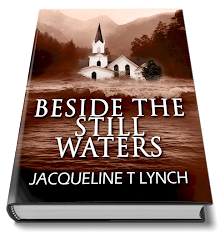
Beside the Still Waters - A novel on the creation of the Quabbin Reservoir

This is to announce the release of my latest novel (another one), “Beside the Still Waters”, available as an ebook from Amazon, Barnes& Noble, and Smashwords.
Four towns, gone.  Dismantled slowly while their inhabitants grieve for a history and heritage that has been voted away from them.  The present threatens; the future belongs to the fearless.
“Beside the Still Waters” is a family saga based on an actual event which displaced four entire towns in central Massachusetts for the construction of a reservoir.  Today, the Quabbin Reservoir provides water for millions of citizens, primarily in the greater Boston area.
Families are divided between those who protest the construction project, those who give up and leave, and those who help to build it.  The central character is Jenny, a girl who comes of age facing the extinction of her community, who becomes the guardian of her family’s heritage, and ultimately, the one to decide what happens to them.  
A rift between two brothers, Eli and John Vaughn, at the turn of the 20th Century continues through to the next generation as John tries to use Jenny, Eli’s daughter, in a plot to regain the family farm from Alonzo, who now runs it, who is Jenny's love.  John is broke and eager to sell the farm to the state, which is buying up area property for the coming reservoir.    Both Alonzo and Eli refuse to sell their properties, and protest removal by eminent domain.  Torn between loyalty to her family and heritage, and the allure of a future beyond the valley, Jenny refuses to remain powerless like the men she loves, but looks for a way to take control.  A disastrous decision may prove fatal in a race against time.
This ebook is currently available for 99 cents for a limited time at Amazon, Barnes &Noble, and Smashwords.  For those without a reading device like the Kindle, Nook or iPad, ebooks can be downloaded and read on your computer through a variety of formats from Smashwords, and the Kindle software can be read on your computer with a free download from Amazon.

Tuesday, March 15, 2011

Cadmium Yellow, Blood Red

This is to announce my latest novel “Cadmium Yellow, Blood Red”, available as an e-book on Amazon.com, Smashwords, and Barnes & Noble.


Here’s the story:

A post-World War II “cozy” mystery about a museum heist, a missing child, a murder, a recent ex-con and an even more recent widow.

In Hartford, Connecticut, 1949, Juliet Van Allen, a museum administrator, discovers that her artist husband is having an affair with another woman. Just a wee bit shocked, Juliet slips unseen back to her office to mull over her options and wish the earth would swallow her, when she meets an intruder. Elmer Vartanian, recently released from prison for a museum robbery, is coerced into helping scout the museum for a heist by a gang that has kidnapped his daughter. When her husband is found murdered, Juliet becomes the prime suspect, and Elmer is her only alibi.

Juliet, the rebellious only daughter of a wealthy financier, and Elmer, a lower-class ex-convict who has educated himself in prison, must partner to solve their separate crises. She is Elmer’s guide to a post-war world that has changed so much since he entered prison. He feels guilty for having missed his daughter’s childhood, for being safe when friends were killed in World War II, and is bewildered over atomic energy, Modern Art, ballpoint pens, and frozen orange juice concentrate.

Juliet is not sure she believes Elmer’s story. Elmer is not sure she didn’t kill her husband, yet they are compelled to work together, dogged by the scandal-monger newsman, the shrewd police detective, and scrutinized by the even more judgmental eye of Hartford’s elite in world where Modern Art meets old-fashioned murder.

The novel is offered for a limited time only at 99 cents.

However, I will offer the book free for the next month to any blogger willing to review the book (Or just give it a mention and a link. I’m not fussy.) on his/her blog. Just email me at: JacquelineTLynch@gmail.com with your blogsite url, and I will email you back with the special coupon code to download “Cadmium Yellow, Blood Red” FREE from Smashwords.com.

Note, on the Smashwords site you can download the book in any format that can be read by Kindle, Sony, Nook, any other kind of e-readers, and can also be downloaded to be read right on your computer. You do not need an e-reader.

When purchasing an ebook from Amazon, also note that you can download the Kindle program to your computer, so you can read books on your computer.

Tuesday, March 8, 2011

First Church (Center Church) of Hartford, Connecticut


Life is often both dignified and comical at the same time. While I would not suggest that the small church pictured here is funny, dwarfed as it is by a larger glass and steel office building, but one may smile all the same at the stubborn refusal of the outdated past to shirk away from the bold and brassy present. I would not call the modern structure “the future”, because it may not be standing in the future. The church however, I would certainly bet on.

It’s already been standing since 1807.

The First Church, or Center Church, of Hartford, Connecticut holds a long and respected place in Connecticut history. It’s first pastor was Thomas Hooker, who when trudging off into the New England Wilderness after a dispute with John Winthrop, Governor of the Massachusetts Bay Colony, founded Hartford on the Connecticut River in 1636.

In the past 375 years, four buildings have served the congregation. The first was a log building where the Old Statehouse stands today. The third structure, built in 1739, stood where the present church stands today. The present meeting house has stood here since 1807, (at the dedication, the congregation was treated to the first performance in Hartford of the “Hallelujah!” chorus from Handel’s Messiah.)

A church welcoming of other faiths, it allowed the first Roman Catholic Mass in Hartford to be celebrated in this building in 1813.

With a few additions and renovations in the last couple of hundred years, the meeting house has weathered a far greater test of time than the shadows thrown from taller, newer buildings.

The bell in the steeple was cast in England in 1633. It still rings out on Main Street.

For more on the First Church or Center Church of Hartford, have a look at this website.

Now Available