Affiliate notice

Affiliate links may be included in posts, as on sidebar ads, for which compensation may be received.
Showing posts with label Revolutionary War. Show all posts

Friday, July 4, 2025

Independence Day - Countdown to the Semiquincentennial...


We New Englanders just marked in June the 250th anniversary of the Battle of Bunker Hill.  This flag of New England was flown and carried on the battlefield in 1775.  At the end of the year 1775 the first Continental flag was adopted...


And it would be another couple of years before we put aside pine trees and the Union Jack in the corner and replace them with stars of varying designs.  But it was a start, and so we make a start to celebrate a most prestigious year ahead with our Semiquincentenial as a nation.  At this juncture, it would be appropriate to review several of the complaints made against King George III as written in our Declaration of Independence.  They are well worth noting:


He has endeavoured to prevent the population of these States; for that purpose obstructing the Laws for Naturalization of Foreigners; refusing to pass others to encourage their migrations hither, and raising the conditions of new Appropriations of Lands.

He has obstructed the Administration of Justice, by refusing his Assent to Laws for establishing Judiciary powers.

He has made Judges dependent on his Will alone, for the tenure of their offices, and the amount and payment of their salaries.

He has erected a multitude of New Offices, and sent hither swarms of Officers to harrass our people, and eat out their substance.

He has kept among us, in times of peace, Standing Armies without the Consent of our legislatures.

He has affected to render the Military independent of and superior to the Civil power.

He has combined with others to subject us to a jurisdiction foreign to our constitution, and unacknowledged by our laws; giving his Assent to their Acts of pretended Legislation:

For Quartering large bodies of armed troops among us:

For protecting them, by a mock Trial, from punishment for any Murders which they should commit on the Inhabitants of these States:

For cutting off our Trade with all parts of the world:

For imposing Taxes on us without our Consent:

For depriving us in many cases, of the benefits of Trial by Jury:

For transporting us beyond Seas to be tried for pretended offences…

******************

Jacqueline T. Lynch is the author of The Ames Manufacturing Company of Chicopee, Massachusetts - A Northern Factory Town's Perspective on the Civil War;   

Comedy and Tragedy on the Mountain: 70 Years of Summer Theatre on Mt. Tom, HolyokeMassachusetts;

 States of Mind: New England

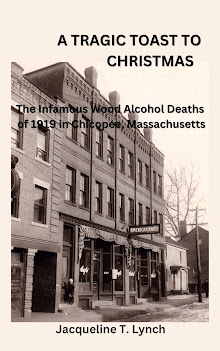
A Tragic Toast to Christmas -- The Infamous Wood Alcohol Deaths of 1919 in Chicopee, Mass.; as well as books on classic films and several novels.  Her Double V Mysteries series is set in New England in the early 1950s.  

TO JOIN HER READERS' GROUP - follow this link for a free book as a thank-you for joining.

Saturday, July 4, 2020

Benoni Chapin - Revolutionary War grave - Chicopee, Massachusetts

Old Burying Ground, Chicopee, Mass. - photo by JT Lynch

There was a village green in front of the first Meeting House in 1775. In Colonial times, every able-bodied man was required to attend training for the militia, and here is where they drilled. When the Revolution came, some 38 men of this village would fight in battles from the eastern part of the state to as far away as Fort Ticonderoga. The Chicopee Street Burying Ground, not too far from where they first drilled, is the final resting place of many of these men. 
In this photo we see the top of the headstone of Edward Chapin, Jr., who is buried with his father, Deacon Edward Chapin (who fought in the French and Indian War), and behind them, the grave of Benoni Chapin. We know little about Edward, Jr.'s service, but Benoni enlisted on Christmas Day 1776 as part of the Hampshire County Militia. He was 51 years old when he enlisted. 
In those days, there was no Hampden County; we were all part of Hampshire County then. Here is Benoni Chapin's service record: Private, Capt. Daniel Caldwell's co., Col. Timothy Robinson's detachment of Hampshire Co. militia; enlisted Dec. 25, 1776; discharged April 2, 1777; roll sworn to at Springfield; also, Capt. John Morgan's co.; enlisted Jan. 5, 1778; discharged July 1, 1778; service, 5 mos. 26 days; company detached from militia of Hampshire and Worcester counties to guard stores and magazines at Springfield and Brookfield; also, Capt. Joseph Browning's co., Col. Seth Murray's (Hampshire Co.) regt.; enlisted July 21, 1780; discharged Oct. 10, 1780; service 2 mos. 27 days; enlistment, 3 months; company raised to reinforce Continental Army; roll sworn to in Suffolk Co.; also, Corporal, same co. and regt.; order dated Springfield, March 22, 1782. for wages for 3 months service in 1780. Benoni, Private, Capt. Samuel Burt's co., Col. Elisha Porter's (Hampshire Co.) regt; enlisted July 22, 1779; discharged Aug. 25, 1779; service, 1 mo. 7 days, at New London, Conn. 
Source: Massachusetts Soldiers and Sailors in the War of the Revolution, 17 Vols., pp 304, 307.

He died in 1799 at the age of 73, at the dawning of the 19th century in a new country just 18 years old, that he helped to create.

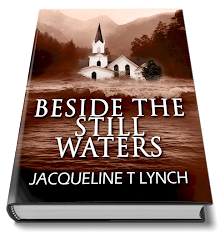
Jaqueline T. Lynch is the author of States of Mind: New England; The Ames Manufacturing Company of Chicopee, Massachusetts; Comedy and Tragedy on the Mountain - 70 Years of Summer Theatre on Mt. Tom, Holyoke, Massachusetts; and Beside the Still Waters, a novel of the making of the Quabbin Reservoir


Wednesday, July 4, 2018

Minuteman Statue - Mosman book - Concord and Chicopee, Mass.

Happy Independence Day! The Minuteman statue at the Concord Bridge in Minute Man National Park was made here in Chicopee under the direction of Silas Mosman, Jr. and his son, Melzar Mosman at the Ames Manufacturing Company, designed by sculptor Daniel Chester French. It commemorates the stand the local farmers took against the British Army in the first days of the Revolutionary War. Poet Ralph Waldo Emerson called it "The Shot Heard Round the World." I'm currently writing a book on the work of Melzar Mosman, and welcome input in the research process from any collector, or knowledgeable source in history, sculpture, or bronze casting. Thank you! Photo by Jacqueline T. Lynch.

Tuesday, June 30, 2015

Prince Hall - Revolutionary Soldier, Patriot, and Advocate for Civil Rights- Boston, Mass.

Photo by JT Lynch

Prince Hall was a Revolutionary soldier, born a slave in 1735, and freed a month after the Boston Massacre.  He earned his living, in part, as a leather craftsman, and created five leather drum heads for the Boston Regiment of Artillery in 1777.


Mr. Hall was a Bostonian who enlisted, who may have fought at Bunker Hill.  He was a voter, a taxpayer, owned his own leather shop and a house in Boston.  He got involved in advocacy for the rights of Boston’s African American community, and founded the world’s first lodge of black Masons, African Lodge No. 1, now named the Prince Hall Grand Lodge—the African Lodge of the Honorable Society of Free and Accepted Masons of Boston.  This was the world's first organized society in America devoted to social, political, and economic improvement.  He spoke out against slavery, and spoke out against the lack of schools for black children, and created one in his own home.

He had hoped that blacks who served in the Continental Army during the Revolution would earn full citizenship as a result of their loyalty and sacrifice.

In his senior years, he spoke at the African Lodge in June 1797, about mob violence against blacks: 

Patience, I say; for were we not possessed of a great measure of it, we could not bear up under the daily insults we meet with in the streets of Boston, much more on public days of recreation. How, at such times, are we shamefully abused, and that to such a degree, that we may truly be said to carry our lives in our hands, and the arrows of death are flying about our heads....tis not for want of courage in you, for they know that they dare not face you man for man, but in a mob, which we despise...

Photo by JT Lynch

He died in 1807 at the age of 72.  He is buried at the Copps Hill Burial Ground in Boston, a cemetery on the U.S. National Register of Historic Places.  The revolution continues, in South Carolina, and everywhere a human being yearns for Independence Day from those are inhuman.

I wish you all a happy Independence Day.


************************************


Ann Blyth: Actress. Singer. Star. 

The eBook and paperback are available from Amazon and CreateSpace, which is the printer. You can also order it from my Etsy shop.

If, however, you wish a signed copy, then email me at JacquelineTLynch@gmail.com and I'll get back to you with the details.


Tuesday, May 20, 2014

Revolutionary War Grave - Coventry, Connecticut


In honor of the coming Memorial Day holiday, a lonely windswept hilltop grave in Coventry, Connecticut.  Here lies Major Thomas Brown, who saw action in the Revolutionary War, and survived the conflict.

Tuesday, December 18, 2012

First Christmas Tree in Windsor Locks, Connecticut


Local legend has it that the first time a Christmas tree was put up and decorated in the United States of America appears to have occurred in Windsor, Connecticut.  A German POW in the Revolutionary War wanted to mark Christmas with a symbol of home.
He was a mercenary soldier, part of the Hessian troops employed by the British.  His name was Hendrick Roddemore.  He was taken captive during the Battle of Bennington, Vermont in August 1777, where American commander General John Stark’s colonial troops defeated the British.  Have a look here at our previous post on the Bennington Battle Monument.
Hundreds of Hessian troops were taken prisoner, and many were transported to Boston, then transferred in small groups around the region.  Hendrick Roddemore was sent to the Pine Meadows section of Windsor, Connecticut on the Connecticut River.  Later the area became the separate town of Windsor Locks.
He was put in custody of Samuel Denslow, who owned a 100-acre farm.  In a small cabin here, perhaps a day or two before Christmas, 1777, Roddemore took the extraordinary action of cutting a small growing tree from outdoors and put it inside the cabin.  We can imagine simple decorations, and may well imagine the curiosity of his captors.  Not only were Christmas trees not used to celebrate Christmas in the United States at that time, but Christmas itself wasn’t usually celebrated in New England, where our Puritan founders still held sway over our consciousness.  Christmas was not widely celebrated here until the following century.  Even up until around World War II, Thanksgiving was the larger holiday in New England.
Christmas was something those New Yorkers did.
The small cabin on West Street is no longer there, but the Noden-Reed Farm is now the home of the Windsor Locks Historical Society, and there is a stone marker planted on what is reckoned to be the site of the first indoor Christmas tree in the United States.

Tuesday, July 3, 2012

Bunker Hill Monument - Charlestown, Massachusetts


Pausing to chat, a couple of Colonial soldiers visit with the statue of one of their leaders, Major General Joseph Warren here inside the monument at Bunker Hill.

The battle in June 1775 was actually won by the British, but it was a hollow victory. They lost many more men, and the Colonials -- specifically the militias of Massachusetts, Rhode Island, Connecticut, and New Hampshire -- proved they could stand up to the British regular army.  They carried the flag of New England, which you can see in this previous post.

Warren, who had received his promotion to Major General only days before, had actually fought as a volunteer private. He was President of the Massachusetts Provincial Congress, and his death was a great loss to the Colonials. Historical artist John Trumbull depicted the event in his famous painting: The Death of General Warren at the Battle of Bunker's Hill, June 17,1775.

Original in collection of Museum of Fine Arts, Boston.  Photographic reproduction in Public Domain.

Happy Independence Day. Remember what it cost.


Tuesday, June 5, 2012

Old Granary Burial Ground - Boston


The small boy dressed in Colonial clothing striding across the Old Granary Burial Ground is not a ghost, even though the modern-dressed boys in the background don’t appear to see him.


Here on Tremont Street in Boston, the burial ground dates from 1660, and among the famous names you’ll see on some of the headstones is John Hancock and Paul Revere. You might meet the occasional historical interpreter as well, dressed appropriately and giving you a tour.

Unless it’s a ghost.


For more on the Old Granary Burial Ground, have a look at this site.


Tuesday, October 25, 2011

Hessians in North New Salem, Massachusetts


On this day, like the rock says, 1,000 Hessian mercenaries passed through the small village of North New Salem in central Massachusetts.   It was early days in the Revolutionary War, so any victory, such as their defeat and surrender at Saratoga, New York, was welcome news.   They were marched to Boston.   I wonder how many made it back to their homes in Europe, or lived to fight another day?

Tuesday, October 11, 2011

Massachusetts Old State House - Original and One Copy


A copy can sometimes tell its own original story. We mentioned the Avenue of States at the Eastern States Exposition a couple of weeks ago in this post. Above is the replica of the Old Massachusetts State House.

Here is the original. Built in 1713, it was the scene of the debate for Revolution by men such as John Hancock, James Otis, John Adams, and Sam Adams. Just outside its door one terrible night, the Boston Massacre roused a colony to rebel.

There had once been the figure of a lion atop the building’s façade, with a unicorn on the other side. These were symbols of the British monarchy. They’re not here now.

But you see them on the replica at the fairgrounds in West Springfield, which was built in 1919.

The Old Statehouse served until 1798, when the new one was built, and this building was turned over to a variety of uses, such as Boston’s city hall, a merchant exchange, and shops. Since 1881 when the Bostonian Society restored the building, it has served as a museum, one of the stops on the Freedom Trail.


The replica, back in western Mass., is noted for selling quantities of maple syrup during the fair, and for this unwieldy but impressive replica of The Mayflower.


No massacre occurred outside its door, but there are quite long lines during the fair. We may have a different sense of hardship in the 21st century.

For more on the Old Statehouse (the real one), have a look at this website.

Tuesday, August 23, 2011

Constitution House - Windsor, Vermont


Here at Elijah West’s tavern in Windsor, Vermont along the Connecticut River, the locals decided in July of 1777 to make this place a free and independent republic. There were a few things to iron out of course, land grants claimed by New Hampshire across the river, and claims by New York on the other side (independence from its neighbors more than independence from Great Britain was the main issue at this stage), and then this whole Revolutionary War hullabaloo. Also, a few months earlier it was decided in a preliminary vote to call the whole prospect “New Connecticut”.


But (we may presume) over a tankard or two, they got down to business and decided that Vermont would be the name (a derivation of the French verd mont -- green mountains), and that their constitution would be a bit different to what had been hammered out by the other states. Vermont was the first to outlaw slavery, and to assure universal voting rights for men whether or not they owned property. Vermont was also the first to establish free public schools.


Having got that out of the way, it was another decade after the Revolutionary War ended that they got around to shedding their Republic and joining the United States in 1791. Vermonters like to be sure, and they seem to have decided the USA was going to work out all right.

For more on the Constitution House, now a museum, have a look at this website.

Tuesday, July 26, 2011

Flags in the Old North Church - Boston, Massachusetts


Inside Boston's Old North Church the flag of New England, and the flag of the United States (when there were quite a few less states).  The bold colors of the flags stand out from the pristine white of the ceiling and columns, and the pure white natural light coming in from the clear windows.  We always equate the Old North Church with Paul Revere's famous ride during the opening days of the Revolutionary War (see this previous post here). 

But it's modern day solace, quietly keeping the faith and the heritage, is just as monumental, if more serene.

Tuesday, April 26, 2011

Paul Revere's Ride


Before we say goodbye to April, we might recall that solid, rhythmic dirge, “On the eighteenth of April, in Seventy-Five/Hardly a man is now alive/Who remembers that famous day and year.”

Many of us remember that famous day and year only because of Henry Wadsworth Longfellow’s poem “Paul Revere’s Ride”. We coming into several months (and years, probably), of Civil War commemorations on the 150th anniversary of that war, but one thing we might also remember is that the turmoil between the North and South, even before the war actually started, coincided with a renewed interest in the American Revolution. Longfellow’s poem, published in 1860, was part of this nostalgia for a time when American ideals seemed more cohesive and the country moved as one with a greater sense of purpose.

The Old North Church

It may not have really been that way, of course. The days of the Revolution were just as fraught with disagreement and tension among Americans as in later days, but nostalgia always makes us think the olden days were better, and people were better.

Paul Revere, though a man of some repute in Boston for being a craftsman, businessman, solid citizen, and like many of his generation, a Revolutionary War vet, really didn’t come into the national pantheon of American heroes until Longfellow made him a hero in his poem.

His deed was to be sent by Dr. Joseph Warren, on the night of April 18, 1775, to Lexington to warn Samuel Adams and John Hancock that they were about to be arrested by British soldiers. Revere was rowed across the Charles River from Boston to Charleston by two other revolutionaries, borrowed a horse, saw that the signal of two lanterns hanging in the church bell tower meant the British were going to cross into Cambridge over the water route rather than on the march out Boston Neck, and delivered the warning.

Then a couple of other riders joined in spreading the alarm, William Dawes, and Dr. Samuel Prescott. The trio decided to continue on to Concord. All three of them were arrested by British soldiers, and Prescott and Dawes managed to escape, but Paul Revere was held for a time, then released, though they confiscated his borrowed horse.

We don’t hear too much about Dawes or Dr. Prescott, not having poems written about them, but Dawes’ part in the adventure is recounted here on his grave marker at the King’s Chapel Burial Ground in Boston.


Paul Revere’s grave marker, at the Old Granary Burial Ground is without any such description, but you don’t need a commemorative marker when Longfellow writes a poem about you.

Oh, and he’s also got this equestrian statue, and that’s the Old North Church in the background. As you can see, he still rides to spread the alarm to every Middlesex village and farm.

Have a look here for more on Paul Revere at this website. Longfellow’s poem is below, for we can never think of Paul Revere without thinking of the poem. 

Paul Revere's Ride
Henry Wadsworth Longfellow, 1860.


LISTEN, my children, and you shall hear
Of the midnight ride of Paul Revere,
On the eighteenth of April, in Seventy-Five;
Hardly a man is now alive
Who remembers that famous day and year.


He said to his friend, "If the British march
By land or sea from the town to-night,
Hang a lantern aloft in the belfry arch
Of the North Church tower, as a signal light, --
One, if by land, and two, if by sea;
And I on the opposite shore will be,
Ready to ride and spread the alarm
Through every Middlesex village and farm,
For the country-folk to be up and to arm."


Then he said "Good-night!" and with muffled oar
Silently rowed to the Charlestown shore,
Just as the moon rose over the bay,
Where swinging wide at her moorings lay
The Somerset, British man-of-war;
A phantom ship, with each mast and spar
Across the moon like a prison-bar,
And a huge black hulk, that was magnified
By its own reflection in the tide.


Meanwhile, his friend, through alley and street
Wanders and watches with eager ears,
Till in the silence around him he hears
The muster of men at the barrack door,
The sound of arms, and the tramp of feet,
And the measured tread of the grenadiers,
Marching down to their boats on the shore.


Then he climbed the tower of the Old North Church,
By the wooden stairs, with stealthy tread,
To the belfry-chamber overhead,
And startled the pigeons from their perch
On the somber rafters, that round him made
Masses and moving shapes of shade, --
By the trembling ladder, steep and tall,
To the highest window in the wall,
Where he paused to listen and look down
A moment on the roofs of the town,
And the moonlight flowing over all.


Beneath, in the churchyard, lay the dead,
In their night-encampment on the hill,
Wrapped in silence so deep and still
That he could hear, like a sentinel's tread,
The watchful night-wind, as it went
Creeping along from tent to tent,
And seeming to whisper, "All is well!"


A moment only he feels the spell
Of the place and the hour, the secret dread
Of the lonely belfry and the dead;
For suddenly all his thoughts are bent
On a shadowy something far away,
Where the river widens to meet the bay, --
A line of black, that bends and floats
On the rising tide, like a bridge of boats.


Meanwhile, impatient to mount and ride,
Booted and spurred, with a heavy stride
On the opposite shore walked Paul Revere.
Now he patted his horse's side,
Now gazed on the landscape far and near,
Then, impetuous, stamped the earth,
And turned and tightened his saddle-girth;
But mostly he watched with eager search
The belfry-tower of the Old North Church,
As it rose above the graves on the hill,
Lonely and spectral and somber and still.


And lo! as he looks, on the belfry's height
A glimmer, and then a gleam of light!
He springs to the saddle, the bridle he turns,
But lingers and gazes, till full on his sight
A second lamp in the belfry burns!


A hurry of hoofs in a village street,
A shape in the moonlight, a bulk in the dark,
And beneath, from the pebbles, in passing, a spark
Struck out by a steed flying fearless and fleet:
That was all! And yet, through the gloom and the light,
The fate of a nation was riding that night;
And the spark struck out by that steed, in his flight,
Kindled the land into flame with its heat.


He has left the village and mounted the steep,
And beneath him, tranquil and broad and deep,
Is the Mystic, meeting the ocean tides;
And under the alders that skirt its edge,
Now soft on the sand, now loud on the ledge,
Is heard the tramp of his steed as he rides.


It was twelve by the village clock,
When he crossed the bridge into Medford town.
He heard the crowing of the cock,
And the barking of the farmer's dog,
And felt the damp of the river fog,
That rises after the sun goes down.


It was one by the village clock,
When he galloped into Lexington.
He saw the gilded weathercock
Swim in the moonlight as he passed,
And the meeting-house windows, blank and bare,
Gaze at him with a spectral glare,
As if they already stood aghast
At the bloody work they would look upon.


It was two by the village clock,
When he came to the bridge in Concord town.
He heard the bleating of the flock,
And the twitter of birds among the trees,
And felt the breath of the morning breeze
Blowing over the meadows brown.


And one was safe and asleep in his bed
Who at the bridge would be first to fall,
Who that day would be lying dead,
Pierced by a British musket-ball.


You know the rest. In the books you have read,
How the British regulars fired and fled, --
How the farmers gave them ball for ball,
From behind each fence and farm-yard wall,
Chasing the red-coats down the lane,
Then crossing the fields to emerge again
Under the trees at the turn of the road,
And only pausing to fire and load.


So through the night rode Paul Revere;
And so through the night went his cry of alarm
To every Middlesex village and farm, --
A cry of defiance and not of fear,
A voice in the darkness, a knock at the door,
And a word that shall echo forevermore!


For, borne on the night-wind of the Past,
Through all our history, to the last,
In the hour of darkness and peril and need,
The people will waken and listen to hear
The hurrying hoof-beat of that steed,
And the midnight-message of Paul Revere.

Tuesday, April 20, 2010

Adams National Historic Park - Quincy, Massachusetts


Since yesterday was Patriot’s Day in Massachusetts (and Maine), let’s have a look at some genuine patriots. We have endured many ersatz self-proclaimed ones of late.

Adams National Historical Park tells the story of four generations of the Adams family (from 1720 to 1927). The park has two main sites: the birthplaces of 2nd U.S. President John Adams and 6th U.S. President John Quincy Adams, and also Peace field, which all together were home to four generations of the Adams family

At the corner of Franklin Street and Presidents Avenue in Quincy, Massachusetts, there stand companionably close together two small salt-box style houses that date from the 1700s. John Adams was born in the older house, the weathered-looking, unpainted structure, in 1735. In the painted newer house, closer to the road, he lived with his wife, Abigail, whom he married in 1764.

That was all before he became President, before these roads were ever named Franklin and Presidents streets, before the town of Quincy came into being. This was still part of Braintree then. Today these two homes on this triangular plot of land form an island in otherwise noisy, hectic sea of 21st century traffic, high tension wires, and convenience stores. Yet, here it is still, believably, the 18th Century.

John Adams wrote in his diary a year after his marriage, on Thursday, December 26th, 1765, “At Home by the Fireside viewing with Pleasure, the falling Snow and the Prospect of a large one.”

It was a peaceful moment in the otherwise dramatic, tumultuous, and history-making life of the farmer-lawyer who rode circuit on his horse through all kinds of weather, snow included. As the years progressed, he would take a leading role in a Revolution, forge ties as a diplomat between Europe’s oldest monarchies and this new American country that was the first democratic republic in the world. He would become its first Vice President, and its second President, and his own son would be the 6th President.

Another house, about a mile away, is the more genteel manor President Adams and his remarkable wife Abigail moved to in 1788. Here they would spend their retirement years, and several generations of their family maintained the property until these three sites were turned over by the Adams descendants to the National Park Service in 1946. This country estate is called Peace field.

The Adams National Historical Park, which comprises these three homes in Quincy is a view not only on American history, but of its culture and artistry, and its ingenuity. There are thousands of artifacts here from the Adams family, including works of art, a library of over 12,000 volumes, furniture, and Abigail’s old bullet mold. She had melted down her pewter spoons to mold into bullets for the Continental Army.

John and Abigail Adams’ dramatic adventures during the Revolution and presidential years were chronicled in historian David McCullough’s “John Adams”, which won the Pultizer Prize and was made into the critically acclaimed HBO miniseries in 2008. In that year, after the miniseries was shown, the Adams National Historical Park was overwhelmed with visitors who had suddenly discovered John Adams through that program and now wanted to re-visit him and Abigail again in the best place that was possible.

Now that the crowds visiting these three homesteads have thinned out, it’s a great time to visit. Also down the street is the United First Parish Church where both President John Adams and President John Quincy Adams, and their ladies, are buried. More on that another time.

For more on the Adams National Historic Park, have a look at this website. For more on the HBO miniseries, have a look here.

Tuesday, February 23, 2010

Washington Memorial Tablet - Hartford, Connecticut

This memorial tablet to George Washington stands in the shadow (literally in this photo), of the Wadsworth Atheneum in Hartford, Connecticut. Washington came to Hartford a few times during the crucial years of the fight for American Independence, and then once as President.

General George Washington first passed this way in 1775 on his journey to take command of the Continental Army.

He met Comte de Rochambeau, the French ally of the fledging American revolutionaries at the Hartford home of Jeremiah Wadsworth in 1780, along with Lafayette and General Knox.  The site is now where the magnificent Wadsworth Atheneum stands. See this previous blog post on the Wadsworth Atheneum, and this one on the Rochambeau memorial in Rhode Island as a tribute to Rochambeau's valuable aide.

He returned to Hartford the following year, and made his final visit as President on a tour of the Eastern “States” in 1789. The memorial was dedicated in 1932 by the Connecticut Daughters of the Revolution “in abiding reverence”.

We have many memorials to heroes and events of the past, some magnificent structures and works of art, and some, like this, more modest tablets. It does not matter the size, or perhaps even a location of convenience. What matters is the abiding reverence.

Friday, July 31, 2009

Bennington Battle Monument - Vermont


Tuesday’s post mentioned the Quakers of Adams, Massachusetts who fought in the Battle of Bennington in the Revolutionary War. Today we have a look at the Bennington Battle Monument, at 306 feet the tallest structure in Vermont.

This stone obelisk was built in the late 1880s. On this site the American colonists kept a store of weapons and food. British General John Burgoyne wanted to capture it for his own troops. The actual battle occurred in nearby Wallomsac in August, 1777.

American Brigadier General John Stark and his force of 2,000 men, mostly untrained, from Vermont, New Hampshire and Berkshire County, Mass. (including the aforementioned Quakers) defeated two detachments of Burgoyne’s army, foiling the British attempt to cut New England off from the other colonies. The afternoon of August 16th was when the battle began, and Stark is reputed, according to legend, to have said, “There are the Red Coats; they will be ours or tonight Molly Stark sleeps a widow.” Two hours later, the British retreated in disarray.

When a second unit of British soldiers appeared, Colonel Seth Warner and his Green Mountain Boys arrived in the nick of time and the British retreated once more.

Due mainly to his failure to achieve the supplies he wanted, Burgoyne was forced to surrender two months later his entire command of 8,000 men of British, Hessian, and Brunswick troops after the Battle of Saratoga. It was a turning point for the American Revolution.

Here in Bennington at the site of this monument, opened in 1891, the Battle of Bennington is marked every year on August 16th. If you’re in the Bennington, Vermont area, you might drop by for the celebration. You can take an elevator to the top of the monument and have a look yourself at the rolling woodland where a revolution was scored in blood, and down at the peaceful towns in Vermont and New York that grew up from lonely wilderness outposts.

For more information, have a look here on the Bennington Battle Monument.

Tuesday, July 28, 2009

Quaker Meeting House - Adams, Mass.


A cool breeze, a brilliant blue morning sky, and hilltop Quaker meeting house in Adams in the Berkshires of western Massachusetts becomes at once a thing of sacred stillness, and a communion with the past.


It is vacant now, maintained by descendents of those first Quaker settlers who established this township once called East Hoosuck, but it is owned by the Adams Historical Society, and so the place of worship has become a place apart, the centerpiece of a colonial graveyard, and an artifact of town history.

This denomination of the Society of Friends moved here from the area around Dartmouth, Massachusetts and Smithfield, Rhode Island in the late 1760s. The meeting house dates from 1782.

At that time their beliefs, which varied from opposition to slavery, to war, and to the equality of men and women to a degree that was unknown among non-Quakers, as well as their silence services in which each person is allowed to be guided by his own “inner light” rather than a church or clergy to bring them closer to God, were cause for the Quakers to be persecuted. In the 1600s, they were hanged on Boston Common.

In this quiet and peaceful spot they were removed from that horror, but did not shut themselves off from the injustices of the world. They promoted the humane treatment of prisoners and the mentally ill. They extended their friendship to the Indians, and to slaves. Massachusetts had abolished slavery in 1790, but it was still permitted in New York until 1826. Several runaway slaves from New York State found refuge here among the Quakers.

The Friends also engaged in another bitter aspect of society, and one which was for them especially agonizing. Despite their espoused opposition to war, some Quakers from this community fought in the Revolutionary War at the Battle of Bennington in nearby Vermont. Below the meeting house, among a cluster of headstones, there is a memorial boulder on which a plaque is dedicated to those Friends, “laying aside their religious scruples took up arms in defense of their homes and liberties.”

The struggle of scruples for Quakers on this point was recently discussed in a review of “Friendly Persuasion” on my Another Old Movie Blog.

A total of 40 Quaker families lived and gathered for meeting here in 1819, and afterwards there was a decline in membership as more and more members of the community headed west as pioneers, even as their ancestors headed west from Rhode Island and eastern Mass. The last official Quaker meeting took place here in 1842.

The old Indian trail called the Pontoosuck Path is now Friend Street that leads up to the hill on which the Meeting House is perched. Look above the rooftop to the massive Mt. Greylock, and the observation tower that looks down, from the highest point in Massachusetts, that can just be seen. One remote world still silently observing another.

For more on the Adams Quaker Meeting House, have a look at this website.

Friday, July 10, 2009

Brant Point Lighthouse - Nantucket, Mass.


Here is Brant Point Lighthouse on Nantucket, America’s second oldest lighthouse after Boston Light. The structure pictured here, built in 1900, was the ninth lighthouse in this location since the 1700s. Lots of storms out that way destroyed the earlier lighthouses. A few fires, too.

When the first lighthouse was built, the town was called Sherburne, and a young whaling industry made the remote town a busy place. Brant Point was chosen for a lighthouse to mark the point all vessels would pass to enter the inner harbor.

In September 1781, Loyalist privateers entered Nantucket Harbor for other reasons, and American forces from Cape Cod arrived to set up cannons at Brant Point. They fired on the enemy ships and forced them out of the harbor.

The sixth lighthouse to stand here, built by the Commonwealth of Massachusetts in 1788, was ceded to the federal government in 1795, when the town changed its name from Sherburne to Nantucket. This light went dark for the War of 1812.

By the 1820s, whaling was a huge industry here, and new lighthouse was built in 1825. This lighthouse still stands, west of the present Brant Point Light, part of U.S. Coast Guard Station Brant Point.

The current Brant Point Light was built 596 feet east of the previous one in 1901. It was automated in 1965. In 1983, the Brant Point Station was renovated by the Coast Guard. Brant Point Light's occulting red light is 26 feet above sea level, one of the lowest of New England's lights. You will see it as your ferry rounds the point to enter the harbor.

As noted in this previous post, the Brant Point Lighthouse was used as a model for the Mystic Seaport Lighthouse.

For more information on the Brant Point Lighthouse, have a look at this website, and this one.

Now Available