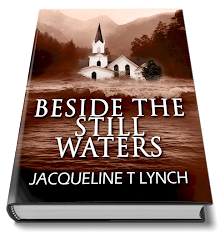
To finish our series on the 75th anniversary of the dissolution of the towns of Prescott, Enfield, Dana and Greenwich for the construction of the Quabbin Reservoir in central Massachusetts, below is the first chapter of my novel Beside the Still Waters which tells a fictional story of characters who represent the last generation in these towns.
In memory of Mrs. Eleanor Griswold
Schmidt, Mr. Walter Johnston King, and the last generation
of Swift River Valley kids.
Beside the Still Waters
- Four towns dismantled slowly while their inhabitants grieve for a history and
heritage that has been voted away from them. Based on an actual event which
displaced four entire towns in central Massachusetts for the construction of a
reservoir, families are divided between those who protest the construction
project, those who give up and leave, and those who help to build it. A rift
between two brothers, Eli and John Vaughn, at the turn of the twentieth century
continues through to the next generation as John tries to use Jenny, Eli’s
daughter, in a plot to regain the family farm. Jenny becomes the guardian of
her family’s heritage, and ultimately, the one to decide what happens to them.
Torn between loyalty to her family and heritage, and the allure of a future
beyond the valley, Jenny refuses to remain powerless like the men she loves,
but looks for a way to take control. A disastrous decision may prove fatal in a
race against time.
***
PART I
CHAPTER 1
Dana, Massachusetts was gone.
Enfield, Massachusetts was gone.
Greenwich, Massachusetts was gone.
Prescott, Massachusetts was gone.
Hand shaking, eyes suddenly blurry with unexpected
tears, Eli tugged his grandfather’s watch and chain from his vest pocket. His family pulled closer to him to watch over
his arm as the second hand swept past midnight.
At 12:01 a.m., April 28, 1938, small children in the
town hall looked around at the walls, at the adults, at each other, incredulous
at the miracle. They had believed they
would all evaporate at midnight. It
wasn’t true. Life went on.
Then the grownups, in an unusual, rather grotesque
display of open grief, sang “Auld Lang
Syne” and wept, and then the children knew the world was over after all.
Eli closed the watch, gathered the chain and fob,
and pressed it, warm from his hand, into his son’s hand.
“This was meant for you.” It had been unfinished business. He capped it off by kissing his wife, as if
that were also a matter of unfinished business.
Jenny watched her parents, and all the old folks,
and the children. Day laborers and
farmers dressed in the suits they would one day be buried in, wives and
daughters dressed each in her plain, simple, one good dress. Bearing witness to the last time most of them
would ever feel a sense of belonging and of community; Jenny, with her
documentarian’s eye, knew that’s what it was.
Roger Lewis shook hands, cast his eye around the
crowded room, hugging his wife and shaking hands with as many people as he
could reach, like a candidate seeking votes.
Mary turned to her daughter Ella, whispering
something into her hair, with arms around each other’s waists like
girlfriends. It struck Jenny that Ella
did not need her.
Jenny blew a kiss to her that was free and with no
obligations or debts. Then Cousin George
and Cousin Eliza stumbled through the crowd.
Eliza, tear-streaked and pitiful, nodded to Mary and twisted her gloves. Mary, in a frenzy rarely seen in the Valley
except at infrequent religious revivals, not that she ever partook of them,
threw her arms around Eliza and bawled.
George and Eli shook hands quietly, and George
smiled to see all of Eli’s children here.
Of George’s boys, only Calvin came with his two kids. They did not speak of Alonzo, but each
privately thought of him. Without
realizing they were doing it, they searched for a sight of his face in the
crowd. The rumors about him were
obviously rather foolish, but those who liked romances and fantasy stories
enjoyed them, and made up more. Alonzo
Vaughn, the great, brooding giant of a man, like a pioneer man, like rebel Dan
Shays, and like Shays was chased off his land.
He would wander in hiding, ever sorrowing for his lost home and his lost
love, some said, like an old New England ballad of ghosts and hardship.
Jenny believed they must have been secretly glad he
wasn’t here. That would ruin the
scenario. If he had suddenly come
through the door in a new suit announcing that he had a swell job somewhere,
that would just ruin the romance. She
had seen the darker side of the romance.
But she looked for him, too.
Other missing faces were recounted less
romantically. Miss Rebecca, who used to
run the Prescott Hill store. The
Sullivans, Miss Murphy the Greenwich Village teacher...only his family
remembered John Vaughn.
Jenny stepped out into the cool, damp night air that
still smelled of dust from their long auto convoy earlier in the day. Wandering people coming and going searched
for their cars or smoked, and drank beer under moonlight, and the massive
collection of stars which seemed within arm’s reach, and the hanging lanterns,
less enticing because they were within reach.
Dick followed behind, dreading what she thought as she searched the
black, shaggy Prescott Hill with her eyes.
“This isn’t the end, Jenny,” he said.
“As long as someone makes a buck?”
“No, I don’t mean that,” he said, pained that she
used his words against him.
“This place, it’s got a life of its own. And what was here...you’ll always carry that
around inside you. Somebody like you
would.”
“Then you believe in redemption? And eternal life?” she asked, turning to face
him, with more acceptance, even humor, than he expected. “I’m glad.
I think I do, too.”
Just as though stating a matter of fact, she gently
pulled herself against him, and kissed his lips. She looked into his eyes for confirmation,
brushed his jaw with her cheek, slowly nuzzled and kissed him again.
Over his shoulder, her eyes searched the dark sky
over where Prescott used to be until an hour ago.
“I can’t ever remember not knowing this day would
come.”
He smiled, holding her closer against him, then
realizing with disappointment that she was talking not about him, but about the
destruction of the Valley, and the coming of the reservoir.
***
1904 - 1910
Massachusetts harbors diminutive mysteries, thin
sagas of emotionally close people. There
has never been enough room for grand epics.
It is not a large state, yet within its borders are
distinctive and unique divisions. These
places are set apart not always by legal boundaries, but delineated by how
their inhabitants choose to be known, how they see themselves. The very essence of individuality is
isolation. People on the shore. People of the mountains. City folk.
Nantucket is an island. Cape Cod is an arm of sand jutting out to
meet the sea. Boston is the capitol, an
historic American metropolis, the grand dame of American history, but to New
Englanders for whom the rest of America does not exist, Boston is sometimes
regarded as the center of the universe, the so-called Hub. The Berkshires are western mountains, behind
them is where the sun sets, unseen by the Hub until tomorrow. Massachusetts is a small place, settled for
the most part by Europeans from small countries, whose sense of space is
perhaps by now genetic.
Hitching the wagon.
Backing out the horses and hitching the wagon. Saying goodbye to Mother at the window, with
a nod, and going to the barn. One last
look at Mother, not meaning to, but catching her dismal expression, her
disapproval and her sense of loneliness, the attention she felt was due
her. Jerusha Vaughn had never left
Prescott in all her life, not even to go to a community picnic in the next
town. Her sons John and Elijah, and her
husband, Walter, tried to leave for their outing with light hearts, but she
wouldn’t let them.
Some people from Massachusetts had left New England
and settled the American West as pioneers.
They became different people from the ones who stayed. The ones who stayed became like a hybrid
plant, truer and truer to itself with every generation, but hybrid, lacking the
new and different, becomes weaker, and extremely sensitive to exposure.
“You’re for the parade and the war vets, Pa?” John smirked, giving a sidelong glance to Eli
that mimicked his father.
“The latest war with Spain, that’s TR’s war and he
can have it.”
“Can’t compare to the War Between the States, hey,
Pa?” Eli returned John’s glance, and
Walter huffed.
“Different sort of men. Why, my father…”
“Who fought with the 31st Mass.,” John
and Eli echoed.
“That’s enough out of you boys.” Walter smiled.
In the central part of the state lies the Swift
River Valley, whose small mountains form the rim of a bowl. The Swift River flows in three separate
branches through the valley called the East, the Middle, and the West
Branch. They join in the town of
Enfield, the southernmost town in the Valley.
The united streams make a river that leaves the Valley, continuing
southward where it empties into the Chicopee River, which flows westward to the
Connecticut River, which dumps itself into Long Island Sound and the Atlantic
Ocean. Swift River Valley children have
made the journey in their minds when dropping a leaf into one of the branches,
trying to follow its course. The hopeful
leaf is their message to posterity.
The children know that the Swift River Valley is not
near the ocean, which none of them have ever seen though barely eighty-odd
miles away. It is not near an equally
mythical sounding place called Boston, and the western Berkshires can just be
seen if one climbs the Great Quabbin Hill on a clear day. The small, affable, almost cartoon-like train
locally called the “Rabbit Run” rumbles through the Valley like a fourth river
branch. It links the small manufacturing town of Athol to the north with the
large commercial city of Springfield to the southwest on the Connecticut River,
and stops so often on the whim of its conductor, Mr. Doane, that it takes
pretty nearly three hours to make the fifty-mile trip. Despite these links, the
towns of the Swift River Valley: Greenwich, Dana, Prescott, and Enfield were as
isolated from the rest of Nineteenth Century Massachusetts as the old Bay
Colony was from the Crown. Just as
distant psychologically, just as different, just as vulnerable to outside
edicts, and just as contemptuous of them.
At nineteen, John Vaughn came specifically to chase
girls and mainly to take a day off from the farm, which was unusual for a
Tuesday. Sunday was the day for rest,
which meant after chores and church.
Chores always came, no matter which day one chose to rest. John quickly lost his brother and father in
the huge tent staked on the common.
These communities’ divergence began with the
colonists’ defeat of the Pequots of King Philip’s War when the ancestors of the
current populace settled the Valley, then part of Narragansett Township 4. They worked it into Quabbin Parish, and were
left quite alone for generations. There
had been that furor between the Commonwealth and local man Daniel Shays, to be
sure, whose tax-ridden, poverty-stricken post-Revolutionary War rebels were
hunted down by Governor Bowdoin’s militia in the surrounding hills. Shays Rebellion was only an historical
footnote now, an anecdote told by firelight, even though it helped lead to the
creation of the United States Constitution.
It had been many years since Shays’ Rebellion, since
the last local settler was captured by Indians, and since the Commonwealth,
i.e. Boston, had anything to do with them, which was fine.
At eighteen, Elijah, or Eli as he was called, came
to the town picnic for reasons which were not as clearly defined as his
father’s or his brother’s. He guessed he
was interested in seeing the parade, and to hear the band concert given by the
Mount L Band of North Dana, and eat at the formal noon dinner. Mostly, he wanted to be part of something and
start the lessons he knew were out in the world waiting especially for him.
In Industrial Massachusetts of the late nineteenth century,
the Swift River Valley was still teaching its children by the primer, still
arguing Whig and Federalist, while the great social causes of the day like
child labor, women’s suffrage, Emancipation swept by them, though enough Valley
men had fought for the Union on principle and for something to do.
They were the direct descendants of Revolutionaries
and Rebels. However, by the early twentieth
century, they were neither. Their Swift
River Valley was just managing to enter the late nineteenth century, which had
found the Valley at its zenith. The arrival
of the railroad, of the motorcar, and of the miracle of leisure time for some
people, had opened the Valley to industry, to summer residents whose rustic
camps along the lakes dotting the Valley’s floor swelled the population in
Enfield alone to 1,036 in 1906. Distance
in Massachusetts was always more a state of mind than of fact, but lately the
mind was playing tricks. Some gloomily
predicted a day when the Valley might actually become crowded. They would lose their isolation, which
despite its inconvenience had made them just what they were.
Eli wanted, he thought, at least to be part of
things, not just a bystander. Eli’s
problem, so he felt, was that he was always too ready to see things at a
distance, a quality which removed its possessor from those very things which
interested him most.
So Greenwich (pronounced by its inhabitants as
Green-witch and not “Gren-itch” as with other more sophisticated or affluent
communities with the same name) celebrated its Sesquicentennial in August of
1904 with these feelings of rapturous self-identity, expressed not so much in
words as in banners and bunting.
Situated smack in the middle of the Swift River Valley, the little town
on the Valley floor formed a community core for all the towns and lonesome villages
in the area.
Red, white, and blue drapery billowed halfway up the
steeple of the Congregational Church at Greenwich Plains. One entered the road along the common through
a kind of triumphal arch made of wood, ropes of greens, and a little more
bunting. The banner read “Greenwich 1754
- 1904.”
Teams of horses filed along the converging roads in
a makeshift parking lot. The train
brought more visitors from Springfield and Athol. It would be the largest crowd ever gathered
in the town’s history, the biggest celebration in the Valley. The crowd, especially the organizing
committee, summoned strength from resurrecting the glories of the past. The future was bothersome and suspect.
At one of the nooning parties, into which the crowd
had broken up for dinner, Eli paid for his meal with money he’d gotten for
helping cut ice from Quabbin Lake last winter.
Holding it had made him feel rich for months, but he graciously let it
go now. Since he did not see his father
or John for company, he sat by himself, and carefully began work on the
suspiciously dainty chicken salad sandwich, but he made up for its lack of
substance with the customary wedge of mince pie, heavy with lard. A good pie was a meal unto itself. Surely the chicken salad was only for
esthetics.
Eli knew about esthetics. That was what separated his father’s rough
hilltop farm in Prescott from the doilied, credenzaed parlors of Enfield, from
the shops and hotels of Dana which had electricity, sometimes, in some parts of
town, for some people. Eli knew about
the better things, even if he’d only heard about them second or
third-hand. Like the chicken salad
sandwich, he was not sure about the worth of all of them. What he most wanted in life was to be able to
judge for himself. He distrusted the
opinions of just about everybody else.
The speaker on the platform intoned a litany of
their God-given rights of self-preservation, fussing at the end of every
glorious paragraph to pull his celluloid collar away from his Adam’s
apple. His wife listened distractedly
and caught deft snatches of gossip over the back of her chair while publicly
adoring her husband.
Eli listened, fighting drowsiness, pondering the
self-congratulatory tone of the speech, which defended the Declaration of
Independence as a darned good idea. The
whole day was a tribute to Greenwich and to themselves for being
themselves. The women’s choir sang songs
of home and hearth, ballads of the honest farmer and the glories of battle and
being Christian. Such self-absorption
gave Eli a gloomy moment and he glanced to the north at Mount Pomeroy, and
south to Mount Lizzie, and west to his own Prescott ridge for comfort. Each round, shaggy peak decorated the Valley
with precision, like points on a compass.
It made a person certain of where he stood.
In a moment Eli heard the clash of voices,
cacophonous against the backdrop of the well-meaning ladies’ choir, and he
turned to catch the tail part of his brother being hustled away from the parked
carriages. John had evidently gotten too
friendly with a girl whose father was one of the celebration’s “Special
Police,” deputized for the day to locate missing youngsters and remove heavy
drinkers, though if a man could find a drink here he was nothing if not
resourceful, an admirable quality.
Eli walked over, but watched from a distance. Making sure John was all right was one thing,
sharing his disgrace was another.
John brushed indignity off his made-over suit and
angled his hat to its former tilt. John
had started a mustache of late and though it had begun slowly as a dirty shadow
under his nose, one could see the promising future in his so handsome face.
A girl standing near him caught the smile of Eli’s
self-imposed distance.
“My uncle don’t find it so funny.”
Eli then noticed her beside him. She was a child, rebuking him with the
scornful dignity of a matron, but a child still in her white pinafore. She held her straw sailor hat in her hand
because she thought it made her look like a child, not dreaming it was not the
hat.
“Watch you don’t get no freckles.” He refrained from pulling at one of her
braids.
“My uncle will settle him. That’s my cousin he’s being fresh with.”
“Don’t tell me you wish it was you?” John said as he
passed her. John grinned down at her and
actually grabbed a fistful of black braid, but she only jerked her head back
and crossed her arms, standing her ground.
She smiled a little as well. Eli
noticed, because he was likely to, and John did not.
“Eli, I’ll find my own way back.”
Eli nodded.
John walked away, lost in the crowd again. Eli stood with his hands in the pockets of
his new long pants, with the girl at his side, both watching after John.
“So he’s y’friend,” she said in mock contempt, as if
it did not surprise her at all.
“He’s my brother, if it’s any of your business. Well, I’m goin’ to watch the baseball now, if
you wanna follow me.”
“Who’d want to follow you?” she pulled apart her
folded arms, slamming them down at her sides.
“You’re just like y’brother.” She
stomped away as much as anyone can in hobnailed boots on damp grass. It had been drizzling since dessert.
Eli watched her go, smiling at what she had
said. He was not like John and everybody
knew it.
Eli looked around for his father, knowing he would
want to be going home soon, as being away from Prescott too long made him
anxious. He found Walter standing by the
carriage, running his hands through his graying beard, wiping the mist off his
cheeks with his handkerchief. He had
known Eli would come to find him there, he knew that John would come home when
he wanted.
“Had enough, Eli?” his father said to cover his
relief.
“Yes, Pa.”
Eli freed the horses and backed them up into the road. Walter Vaughn watched, knowing from
experience some jobs were for four hands, some were for two. He climbed up beside Eli. Eli grasped the reins.
“Rain doesn’t seem to be spoiling their fun.” Walter
Vaughn said, “We ought to get back to your mother.”
“How’d y’like the old vets, Pa?”
“Old is right.
We lose a few each time. They are
the times past, Eli. Past dies slowly
around here, but it surely does die.”
Eli and Walter Vaughn turned up the
Prescott-Greenwich road, crossed the Middle Branch of the Swift River which
flowed nervously under the wooden bridge, and returned home to the hill town of
Prescott.
The Valley was comprised of several villages,
“hollows” and minute communities which did not appear on the state atlas. The four incorporated towns a person could
actually find on the map were called Prescott, Greenwich, Enfield, and
Dana. Prescott, where the Vaughns lived
was the smallest and most agricultural of the Valley towns. It was the most remote on its high, stony
ridge where people lived as they had lived for three hundred years, without
running water, without electricity, without paved roads, or without help from
anybody.
Some eighty miles east of here, Boston, the Hub,
formed that center of the universe from which rippled rings of travel, trade,
culture, and history. From its earliest
days, it attracted a large population, larger than that appendage of soil could
sustain. Parts of its so-called Back Bay
were filled in to create more land. As
early as the colonial days the Charles River was both its main source of water
and its main repository for sewage. It
was overworked and polluted. The search
for a supply of clean, fresh water began.
It ended three centuries later in the Swift River
Valley.
###
****
I'll be speaking at the Chicopee Historical Society, meeting at the Chicopee
Public Library, Front Street, Chicopee, Massachusetts on this Thursday, May 16th with a PowerPoint presentation about
topics from my recently published
States of Mind: New England. That
book will be available for sale at this event.