This is to announce that this blog will be going on hiatus for a couple of weeks. I’ll still respond to comments for a few days, but I’ve got some other work to tend to, and I’ll be back with a new post on Tuesday, Monday, April 12th.
A play of mine called “One Good Turn” was chosen as a winner in the Northern Kentucky University Y.E.S. Festival of Plays, so if any readers down in the Cincinnati area have some free time the weekend of April 9th through 10th, this and two other winning plays, one by Kelly Kingston Strayer, and one by Karla Jennings, will premiere. Maybe I'll see you there. The festival runs through April 17th.
Tuesday, March 29, 2011
Intermission

Tuesday, March 22, 2011
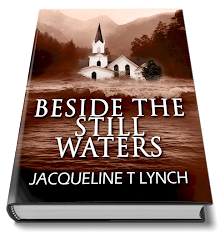
Beside the Still Waters - A novel on the creation of the Quabbin Reservoir

Four towns, gone. Dismantled slowly while their inhabitants grieve for a history and heritage that has been voted away from them. The present threatens; the future belongs to the fearless.
“Beside the Still Waters” is a family saga based on an actual event which displaced four entire towns in central Massachusetts for the construction of a reservoir. Today, the Quabbin Reservoir provides water for millions of citizens, primarily in the greater Boston area.
Families are divided between those who protest the construction project, those who give up and leave, and those who help to build it. The central character is Jenny, a girl who comes of age facing the extinction of her community, who becomes the guardian of her family’s heritage, and ultimately, the one to decide what happens to them.
A rift between two brothers, Eli and John Vaughn, at the turn of the 20th Century continues through to the next generation as John tries to use Jenny, Eli’s daughter, in a plot to regain the family farm from Alonzo, who now runs it, who is Jenny's love. John is broke and eager to sell the farm to the state, which is buying up area property for the coming reservoir. Both Alonzo and Eli refuse to sell their properties, and protest removal by eminent domain. Torn between loyalty to her family and heritage, and the allure of a future beyond the valley, Jenny refuses to remain powerless like the men she loves, but looks for a way to take control. A disastrous decision may prove fatal in a race against time.
This ebook is currently available for 99 cents for a limited time at Amazon, Barnes &Noble, and Smashwords. For those without a reading device like the Kindle, Nook or iPad, ebooks can be downloaded and read on your computer through a variety of formats from Smashwords, and the Kindle software can be read on your computer with a free download from Amazon.
Tuesday, March 15, 2011
Cadmium Yellow, Blood Red

Here’s the story:
A post-World War II “cozy” mystery about a museum heist, a missing child, a murder, a recent ex-con and an even more recent widow.
In Hartford, Connecticut, 1949, Juliet Van Allen, a museum administrator, discovers that her artist husband is having an affair with another woman. Just a wee bit shocked, Juliet slips unseen back to her office to mull over her options and wish the earth would swallow her, when she meets an intruder. Elmer Vartanian, recently released from prison for a museum robbery, is coerced into helping scout the museum for a heist by a gang that has kidnapped his daughter. When her husband is found murdered, Juliet becomes the prime suspect, and Elmer is her only alibi.
Juliet, the rebellious only daughter of a wealthy financier, and Elmer, a lower-class ex-convict who has educated himself in prison, must partner to solve their separate crises. She is Elmer’s guide to a post-war world that has changed so much since he entered prison. He feels guilty for having missed his daughter’s childhood, for being safe when friends were killed in World War II, and is bewildered over atomic energy, Modern Art, ballpoint pens, and frozen orange juice concentrate.
Juliet is not sure she believes Elmer’s story. Elmer is not sure she didn’t kill her husband, yet they are compelled to work together, dogged by the scandal-monger newsman, the shrewd police detective, and scrutinized by the even more judgmental eye of Hartford’s elite in world where Modern Art meets old-fashioned murder.
The novel is offered for a limited time only at 99 cents.
However, I will offer the book free for the next month to any blogger willing to review the book (Or just give it a mention and a link. I’m not fussy.) on his/her blog. Just email me at: JacquelineTLynch@gmail.com with your blogsite url, and I will email you back with the special coupon code to download “Cadmium Yellow, Blood Red” FREE from Smashwords.com.
Note, on the Smashwords site you can download the book in any format that can be read by Kindle, Sony, Nook, any other kind of e-readers, and can also be downloaded to be read right on your computer. You do not need an e-reader.
When purchasing an ebook from Amazon, also note that you can download the Kindle program to your computer, so you can read books on your computer.
Tuesday, March 8, 2011
First Church (Center Church) of Hartford, Connecticut

Life is often both dignified and comical at the same time. While I would not suggest that the small church pictured here is funny, dwarfed as it is by a larger glass and steel office building, but one may smile all the same at the stubborn refusal of the outdated past to shirk away from the bold and brassy present. I would not call the modern structure “the future”, because it may not be standing in the future. The church however, I would certainly bet on.
It’s already been standing since 1807.
The First Church, or Center Church, of Hartford, Connecticut holds a long and respected place in Connecticut history. It’s first pastor was Thomas Hooker, who when trudging off into the New England Wilderness after a dispute with John Winthrop, Governor of the Massachusetts Bay Colony, founded Hartford on the Connecticut River in 1636.
In the past 375 years, four buildings have served the congregation. The first was a log building where the Old Statehouse stands today. The third structure, built in 1739, stood where the present church stands today. The present meeting house has stood here since 1807, (at the dedication, the congregation was treated to the first performance in Hartford of the “Hallelujah!” chorus from Handel’s Messiah.)
A church welcoming of other faiths, it allowed the first Roman Catholic Mass in Hartford to be celebrated in this building in 1813.
With a few additions and renovations in the last couple of hundred years, the meeting house has weathered a far greater test of time than the shadows thrown from taller, newer buildings.
The bell in the steeple was cast in England in 1633. It still rings out on Main Street.
For more on the First Church or Center Church of Hartford, have a look at this website.
Tuesday, March 1, 2011
Vintage Radio & Communications Museum of Connecticut

The Vintage Radio & Communications Museum of Connecticut showcases our march through time in the noisy 20th Century with a fantastic collection of technology that gave us what we wanted, and made us who we were. Then, and now.


We seem to trace our own lives, and the lives of at least three generations of our families, when we visit here. Have a look at the website for more information.
Tuesday, February 22, 2011
Iwo Jima Memorial - Manchester, New Hampshire

From February 19th through 25th, 1945, a battle on Iwo Jima left an enormous number of casualties on both sides, and mass graves. It was late in the war, this would be the last winter, but the snows of New Hampshire were missing from this Pacific island, awash in human blood and gore, and close enough to Japan to make giving up unthinkable to both American and Japanese forces.

A monument sits in a quiet place in a Manchester, New Hampshire park, and the green of last summer seems too-vivid, garish in the snows of today. The memorial is dedicated to Rene Gagnon, who was born and raised in Manchester, and to all Manchester service personnel who “answered their country’s call.”

His moment in history seemed to be something he tried to live up to, and also from which he tried to capitalize. He appeared as himself in “The Sands of Iwo Jima” (1949), and in a documentary short called “To the Shores of Iwo Jima” (1945), and a couple of TV appearances, but his notoriety as a common man captured in one of the most famous photos on one of the important events of World War II was a doubled -edged sword. He spent the rest of his life in menial jobs, alcoholic and embittered by failing to live up to, or beyond, that moment of destiny. He died in 1979. He is buried in Arlington National Cemetery.

For more on PFC Rene Gagnon, have a look at this website. For more on the Battle of Iwo Jima, have a look here.
Tuesday, February 15, 2011
Edwin Booth in Waterbury, Connecticut

Edwin Booth, Library of Congress - in public domain
We’ll stay in Waterbury, Connecticut this week, but much farther in the past. The great 19th century actor, Edwin Booth, whose tribulations in Boston when his brother, John Wilkes Booth, murdered President Abraham Lincoln (discussed in this post on my Tragedy and Comedy in New England blog) -- came to Waterbury for what became a groundbreaking performance in “Hamlet”.
We have this episode in Edwin Booth’s career mentioned in Curtain Time - The Story of the American Theater by Lloyd Morris (Random House, NY, 1953), wherein his acting company was scheduled for a single performance of Hamlet. The author does not specify the year. Tickets had been sold out, and the eager audience filled the house. The cast arrived by train, but their scenery and costumes did not.
This incident is also mentioned in the memoirs of Booth’s daughter, Edwina Booth Grossman in Edwin Booth - Recollections by His Daughter, (The Century Company, NY 1894).
When told of the problem, Booth calmly took charge, decided not to cancel the performance and stood out upon the stage before the curtain. He told the audience about the mishap, and said they would play “Hamlet” anyway, on the bare stage and in street clothes.
This was not an era for much experimentation in theatre, certainly with few attempts to “modernize” the classics, but reportedly the audience not only accepted the bare-bones production, but were riveted, captivated by this most masterful Hamlet.
As an unexpected finale, the costumes, props, and set pieces arrived at the theater just in time for the last two acts of this five-act play.
According to the author, this was the first-known incident of performing a Shakespearean play in street clothes and on a bare stage.
“Annoying as this incident was, he enjoyed the novelty of the experience,” his daughter writes, “and frequently referred to it in later years.”
Subscribe to:
Posts (Atom)