Affiliate notice

Affiliate links may be included in posts, as on sidebar ads, for which compensation may be received.
Showing posts with label 18th Century. Show all posts

Wednesday, September 16, 2026

Chicopee in the Revolutionary War - Chicopee, Massachusetts


TONIGHT - CHICOPEE IN THE REVOLUTIONARY WAR!


I'll be giving a presentation for the Chicopee Historical Society on Chicopee’s experience during the Revolutionary War. The soldiers from Chicopee Street, the settlement of Skipmuck (future Chicopee Falls) and the area of what is now Chicopee Center were all the northernmost part of Springfield. Several men and boys marched to Boston when news of the Battle of Lexington and Concord was brought by a post rider the next day.


Their enlistments, their battles, and their stories will be discussed tonight, Wednesday, September 16, 2026, at 6:30 p.m. in the Bazan Community Room of the Chicopee Public Library, 449 Front Street, Chicopee. The event is free and open to the public.


Photo of Moses Bliss grave, and top photo, Old Burying Ground, Chicopee Street by JT Lynch

******************

Jacqueline T. Lynch is the author of:


The Ames Manufacturing Company of Chicopee, Massachusetts - A Northern Factory Town's Perspective on the Civil War
;   


Comedy and Tragedy on the Mountain: 70 Years of Summer Theatre on Mt.
Tom, Holyoke, Massachusetts;


States of Mind: New England
, essays from New England Travels


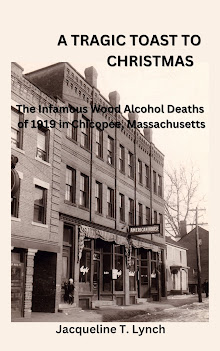
A Tragic Toast to Christmas -- The Infamous Wood Alcohol Deaths of 1919 in Chicopee, Mass.
; as well as books on classic films and several novels.  


Her Double V Mysteries series is set in New England in the early 1950s.  

Most of her books can be purchased at Bookshop.org here, as well as most online shops.

Or follow the links on her website to many online shops - www.JacquelineTLynch.com.


TO JOIN HER MAILING LIST - follow this link for a free book as a thank-you for joining.


Monday, August 24, 2026

Boston Post Road marker - Springfield, Massachusetts


This postcard from about 1909 shows one of the mile markers on the Boston Post Road in Springfield, Mass.: "This Stone is Erected by Joseph Wait, Esq., of Brookfield For the Benefit of Travllers AD 1763."

The postcard was printed in Germany by the Robbins Bros. Company of Boston.

******************

Jacqueline T. Lynch is the author of:


The Ames Manufacturing Company of Chicopee, Massachusetts - A Northern Factory Town's Perspective on the Civil War
;   


Comedy and Tragedy on the Mountain: 70 Years of Summer Theatre on Mt.
Tom, Holyoke, Massachusetts;


States of Mind: New England
, essays from New England Travels


A Tragic Toast to Christmas -- The Infamous Wood Alcohol Deaths of 1919 in Chicopee, Mass.
; as well as books on classic films and several novels.  


Her Double V Mysteries series is set in New England in the early 1950s.  

Most of her books can be purchased at Bookshop.org here, as well as most online shops.

TO JOIN HER MAILING LIST - follow this link for a free book as a thank-you for joining.


Saturday, July 4, 2020

Benoni Chapin - Revolutionary War grave - Chicopee, Massachusetts

Old Burying Ground, Chicopee, Mass. - photo by JT Lynch

There was a village green in front of the first Meeting House in 1775. In Colonial times, every able-bodied man was required to attend training for the militia, and here is where they drilled. When the Revolution came, some 38 men of this village would fight in battles from the eastern part of the state to as far away as Fort Ticonderoga. The Chicopee Street Burying Ground, not too far from where they first drilled, is the final resting place of many of these men. 
In this photo we see the top of the headstone of Edward Chapin, Jr., who is buried with his father, Deacon Edward Chapin (who fought in the French and Indian War), and behind them, the grave of Benoni Chapin. We know little about Edward, Jr.'s service, but Benoni enlisted on Christmas Day 1776 as part of the Hampshire County Militia. He was 51 years old when he enlisted. 
In those days, there was no Hampden County; we were all part of Hampshire County then. Here is Benoni Chapin's service record: Private, Capt. Daniel Caldwell's co., Col. Timothy Robinson's detachment of Hampshire Co. militia; enlisted Dec. 25, 1776; discharged April 2, 1777; roll sworn to at Springfield; also, Capt. John Morgan's co.; enlisted Jan. 5, 1778; discharged July 1, 1778; service, 5 mos. 26 days; company detached from militia of Hampshire and Worcester counties to guard stores and magazines at Springfield and Brookfield; also, Capt. Joseph Browning's co., Col. Seth Murray's (Hampshire Co.) regt.; enlisted July 21, 1780; discharged Oct. 10, 1780; service 2 mos. 27 days; enlistment, 3 months; company raised to reinforce Continental Army; roll sworn to in Suffolk Co.; also, Corporal, same co. and regt.; order dated Springfield, March 22, 1782. for wages for 3 months service in 1780. Benoni, Private, Capt. Samuel Burt's co., Col. Elisha Porter's (Hampshire Co.) regt; enlisted July 22, 1779; discharged Aug. 25, 1779; service, 1 mo. 7 days, at New London, Conn. 
Source: Massachusetts Soldiers and Sailors in the War of the Revolution, 17 Vols., pp 304, 307.

He died in 1799 at the age of 73, at the dawning of the 19th century in a new country just 18 years old, that he helped to create.

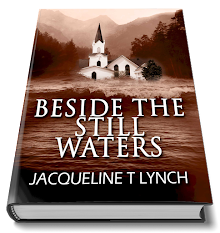
Jaqueline T. Lynch is the author of States of Mind: New England; The Ames Manufacturing Company of Chicopee, Massachusetts; Comedy and Tragedy on the Mountain - 70 Years of Summer Theatre on Mt. Tom, Holyoke, Massachusetts; and Beside the Still Waters, a novel of the making of the Quabbin Reservoir


Wednesday, July 4, 2018

Minuteman Statue - Mosman book - Concord and Chicopee, Mass.

Happy Independence Day! The Minuteman statue at the Concord Bridge in Minute Man National Park was made here in Chicopee under the direction of Silas Mosman, Jr. and his son, Melzar Mosman at the Ames Manufacturing Company, designed by sculptor Daniel Chester French. It commemorates the stand the local farmers took against the British Army in the first days of the Revolutionary War. Poet Ralph Waldo Emerson called it "The Shot Heard Round the World." I'm currently writing a book on the work of Melzar Mosman, and welcome input in the research process from any collector, or knowledgeable source in history, sculpture, or bronze casting. Thank you! Photo by Jacqueline T. Lynch.

Tuesday, December 20, 2016

Washington's message on the Touro Synagogue


George Washington visited the oldest synagogue in this nation (founded in the 1600s) at Newport, Rhode Island.  His remarks on the Touro Synagogue are a reflection of, and support for, the new Bill of Rights.

“...every one shall sit in safety under his own vine and figtree, and there shall be none to make him afraid.”

He wrote this in August 1790.
"For happily the Government of the United States gives to bigotry no sanction, to persecution no assistance, requires only that they who live under its protection should demean themselves as good citizens, in giving it on all occasions their effectual support."
He meant it.  We should mean it, too. 

Happy Hanukkah and blessings to all our countrymen of all faiths.

Tuesday, June 30, 2015

Prince Hall - Revolutionary Soldier, Patriot, and Advocate for Civil Rights- Boston, Mass.

Photo by JT Lynch

Prince Hall was a Revolutionary soldier, born a slave in 1735, and freed a month after the Boston Massacre.  He earned his living, in part, as a leather craftsman, and created five leather drum heads for the Boston Regiment of Artillery in 1777.


Mr. Hall was a Bostonian who enlisted, who may have fought at Bunker Hill.  He was a voter, a taxpayer, owned his own leather shop and a house in Boston.  He got involved in advocacy for the rights of Boston’s African American community, and founded the world’s first lodge of black Masons, African Lodge No. 1, now named the Prince Hall Grand Lodge—the African Lodge of the Honorable Society of Free and Accepted Masons of Boston.  This was the world's first organized society in America devoted to social, political, and economic improvement.  He spoke out against slavery, and spoke out against the lack of schools for black children, and created one in his own home.

He had hoped that blacks who served in the Continental Army during the Revolution would earn full citizenship as a result of their loyalty and sacrifice.

In his senior years, he spoke at the African Lodge in June 1797, about mob violence against blacks: 

Patience, I say; for were we not possessed of a great measure of it, we could not bear up under the daily insults we meet with in the streets of Boston, much more on public days of recreation. How, at such times, are we shamefully abused, and that to such a degree, that we may truly be said to carry our lives in our hands, and the arrows of death are flying about our heads....tis not for want of courage in you, for they know that they dare not face you man for man, but in a mob, which we despise...

Photo by JT Lynch

He died in 1807 at the age of 72.  He is buried at the Copps Hill Burial Ground in Boston, a cemetery on the U.S. National Register of Historic Places.  The revolution continues, in South Carolina, and everywhere a human being yearns for Independence Day from those are inhuman.

I wish you all a happy Independence Day.


************************************


Ann Blyth: Actress. Singer. Star. 

The eBook and paperback are available from Amazon and CreateSpace, which is the printer. You can also order it from my Etsy shop.

If, however, you wish a signed copy, then email me at JacquelineTLynch@gmail.com and I'll get back to you with the details.


Tuesday, February 3, 2015

Yankee Lingo Trivia

A few fun trivia questions from Yankee Talk - A Dictionary of New England Expressions, compiled by Robert Hendrickson and published by Facts On File, Inc., 1996.


See if you can identify these words or expressions:


afterclap

all smiles and johnnycake

Boston strong boy

bulkhead

Downeaster

muckle

Watch Night


Answers next week.


Tuesday, May 20, 2014

Revolutionary War Grave - Coventry, Connecticut


In honor of the coming Memorial Day holiday, a lonely windswept hilltop grave in Coventry, Connecticut.  Here lies Major Thomas Brown, who saw action in the Revolutionary War, and survived the conflict.

Tuesday, January 22, 2013

Connecticut River Valley Tobacco Growing


This sign showing a giant green splotch on the Connecticut River Valley, illustrates the extent of commercial tobacco growing in western New England.  From about Portland, Connecticut, following the river up to lower Vermont, we see a huge swath of land that more or less replicates the gouging of the glacier that once sat here.  Maybe its peeling back layers of earth as it retreated is the reason for this area’s having some of the most fertile growing land in New England.  Certainly left behind a lot of dinosaur footprints.
The first European settlers here were quick to notice, and quick to exploit, the fertile land, and started growing tobacco as early as the 1650s.  The native tribes hereabouts, however, had grown tobacco for their own use long before that.
Photo Luddy/Taylor Connecticut Valley Tobacco Museum

The colonists smoked it in clay pipes then, and some was shipped back to the mother country, but it is said that Connecticut’s Revolutionary War hero (and French and Indian War) Israel Putnam, bringing tobacco seeds back from Cuba was the start of the growing of this special tobacco for rolling into cigars.  We visted his monument in this previous post.
 
Photo Luddy/Taylor Connecticut Valley Tobacco Museum

Commercial tobacco growing, mainly on small family farms, took off in the 1800s, when cigar smoking among men became popular.  The kind grown here was called Broadleaf, the outer wrapper of the cigar.  Competition from Sumatra later in the century inspired growers hereabouts to turn over a new leaf, so to speak, in tobacco growing.  In the early 1900s they came up with the idea of erecting enormous light cloth tents over the tobacco fields, which by cutting direct sunlight and increasing the humidity of the atmosphere underneath the tenting, replicated the growing conditions in Sumatra.  This is called Shade tobacco, and it is considered the finest cigar wrapper.
The tobacco farms, not just small family farms anymore but also large commercial plantations (part of Westover Air Force Base in Chicopee, Massachusetts was once the site of the American Sumatra company plantation), was a huge influence on the economy of the Connecticut River Valley, and provided thousands of jobs.
 
Photo Luddy/Taylor Connecticut Valley Tobacco Museum
Local folks, including many teens, found work here, but tobacco growing is such a labor-intensive project, with a lot of work done by hand, that workers were sought from other parts of the country to work here seasonally.  One of the first drives to bring in outside workers occurred during World War II, when of course a lot of local men were called into the service.  During these years, many young people arrived from the South. One of them a young Martin Luther King, Jr.
 
Religious services, Photo Luddy/Taylor Connecticut Valley Tobacco Museum 
He arrived here in 1944, when he was just 15 years old.  He obtained a job on a tobacco farm in Simsbury, Connecticut that summer to earn money for college.  In The Autobiography of Martin Luther King, Jr. (ed. Clayborne Carson, IPM, Time Warner, 1998), Dr. King recounts that he was surprised that he could attend a “white” church, and eat in any restaurant he wanted, because there were no segregation laws in the north.  “I had never thought that a person of my race could eat anywhere, but we ate in one of the finest restaurants in Hartford.”
He wrote home to his parents in June, 1944:
I am very sorry I am so long about writing but I have been working most of the time.  We are really having a fine time here and the work is very easy.  We have to get up every day at 6:00.  We have very good food.  And I am working kitchen so you see I get better food.
We have service here every Sunday about 8:00 and I am the religious leader we have a Boys choir here and we are going to sing on the air soon.  Sunday I went to church in Simsbury it was a white church…On our way here we saw some things I had never anticipated to see.  After we passed Washington there was no discrimination at all the white people here are very nice.  We go to any place we want to and sit any where we want to.
Tell everybody I said hello and I am still thinking of the church and reading my bible.  And I am not doing any thing I would not do in front of you…
Your Son...
The adult Dr. King continues in his autobiography, “After that summer in Connecticut, it was a bitter feeling going back to segregation…I could never adjust to the separate waiting rooms, separate eating places, separate rest rooms, partly because the separate was always unequal, and partly because the very idea of separation did something to my sense of dignity and self-respect.”
Obviously, not all learning experiences on the tobacco farms were quite as profound as this young man’s, and later decades came to know labor unrest, with conditions that were not always satisfactory in the larger work camps.  Waves of other newcomers came to the Valley as temporary tobacco workers and stayed to make a home here, from Jamaica, from Puerto Rico, as well as from Central America, Haiti, Mexico, and Africa.
 Choir, workers from Jamaica, Photo Luddy/Taylor Connecticut Valley Tobacco Museum
The height of tobacco growing occurred in early 1920s when some 30,800 acres in Connecticut alone were devoted to this crop.  Today, there are only about 2,000 acres left.
This is due to a number of factors, in part to the value of real estate turning land over to industrial parks and shopping plazas, to the fact that cigarette smoking eclipsed the popularity of cigar smoking, and that younger generations have come to understand that smoking will kill you.

 Exhibit Luddy/Taylor Connecticut Valley Tobacco Museum, photo JT Lynch
Two excellent sources of information on the history of tobacco growing in the Connecticut River Valley, used for this article, are the Connecticut Public Television documentary “Connecticut’s Tobacco Valley” (produced and directed by Frank Borres,  2001), and the Luddy/Taylor Connecticut Valley Tobacco Museum.
 
Photo JT Lynch
 
This museum is comprised of a tobacco shed with machinery, implements, and tobacco, and a separate archives building containing many artifacts, exhibits, photos and books on this interesting aspect of western New England history.  It’s located in Windsor, Connecticut.  Have a look here at the website.
Another viewpoint of the story of tobacco farms in Connecticut will be discussed this Thursday on my Another Old Movie Blog when we take a look at “Parrish” (1961), which starred Troy Donahue, Connie Stevens, Claudette Colbert, and Karl Malden.  It’s a lavish, Hollywood version of tobacco growing, but a lot of it was filmed right here in Windsor, Connecticut.  I hope you can join us.
 

Tuesday, December 18, 2012

First Christmas Tree in Windsor Locks, Connecticut


Local legend has it that the first time a Christmas tree was put up and decorated in the United States of America appears to have occurred in Windsor, Connecticut.  A German POW in the Revolutionary War wanted to mark Christmas with a symbol of home.
He was a mercenary soldier, part of the Hessian troops employed by the British.  His name was Hendrick Roddemore.  He was taken captive during the Battle of Bennington, Vermont in August 1777, where American commander General John Stark’s colonial troops defeated the British.  Have a look here at our previous post on the Bennington Battle Monument.
Hundreds of Hessian troops were taken prisoner, and many were transported to Boston, then transferred in small groups around the region.  Hendrick Roddemore was sent to the Pine Meadows section of Windsor, Connecticut on the Connecticut River.  Later the area became the separate town of Windsor Locks.
He was put in custody of Samuel Denslow, who owned a 100-acre farm.  In a small cabin here, perhaps a day or two before Christmas, 1777, Roddemore took the extraordinary action of cutting a small growing tree from outdoors and put it inside the cabin.  We can imagine simple decorations, and may well imagine the curiosity of his captors.  Not only were Christmas trees not used to celebrate Christmas in the United States at that time, but Christmas itself wasn’t usually celebrated in New England, where our Puritan founders still held sway over our consciousness.  Christmas was not widely celebrated here until the following century.  Even up until around World War II, Thanksgiving was the larger holiday in New England.
Christmas was something those New Yorkers did.
The small cabin on West Street is no longer there, but the Noden-Reed Farm is now the home of the Windsor Locks Historical Society, and there is a stone marker planted on what is reckoned to be the site of the first indoor Christmas tree in the United States.

Tuesday, October 2, 2012

USS Constitution - Old Ironsides


You can see Boston through the masts, which are truncated in this shot. The USS Constitution was undergoing a little refurbishment when these photos were taken two years ago. She’s presentable again, now on the 200th anniversary of the War of 1812, when Constitution came to fame.

She was launched long before, however, in October 1797, in Boston, not far from where Constitution remains berthed, still a commissioned ship in the US Navy, still the oldest commissioned warship afloat. She last sailed, briefly, under her own power in 1997 as part of her 200th anniversary. That had been for the first time since 1881.

The War of 1812 was such a convoluted episode in our history. President James Madison declared war on Great Britain over “Free Trade and Sailors Rights”, the latter a complaint over the nasty habit of British warships to increase the size of their navy by kidnapping US sailors.

New England nearly seceded over the war at the Hartford Convention, not wanting an interruption of trade with Great Britain.


We invaded Canada a few times, and were repelled each occasion. The final hopes of an autonomous state of Indian tribal control in the Midwest (or Northwest Territory as it was called then) -- supported by Great Britain, were dashed.

The peace treaty was finally signed in Belgium in 1815, but the Battle of New Orleans happened after that. Britain juggled the Napoleonic War at the same time, but when they finally dispatched Napoleon in 1814, they found time to burn Washington, D.C. And Francis Scott Key observed from the deck of a ship wondering in poetic form if the flag, or “Star Spangled Banner” was still there.


That’s a lot of unrelated, overlapping stuff to happen in war not often remembered today.

Though she did defeat four British warships in battle, the USS Constitution’s contributions did not affect the outcome of the War of 1812, but it provided enormous symbolism of a strong new nation. If the Revolutionary War gave us our independence from Great Britain, the War of 1812 solidified it politically, militarily, and especially psychologically. It was really our first taste of nationalism. A few decades after that Era of Good Feeling, national unity dissipated, bitter regionalism came back and led to the American Civil War.


The USS Constitution continues to remain an important symbol. “Old Ironsides”, a nickname earned in the War of 1812 after defeating the HMS Guerriere because the enemy’s cannonballs seemed to bounce off her, was also immortalized, of course, in poetry. This famous work of 1830 by Oliver Wendell Holmes, Sr. was used to promote the ship’s value for American prestige and to stir public support for it not to be decommissioned. The public responded, as it always does, to this sleek frigate with the patriotic legend attached.

Ay, tear her tattered ensign down!
Long has it waved on high,
And many an eye has danced to see
That banner in the sky;
Beneath it rung the battle shout,
And burst the cannon's roar;--
The meteor of the ocean air
Shall sweep the clouds no more.

Her deck, once red with heroes' blood,
Where knelt the vanquished foe,
When winds were hurrying o'er the flood,
And waves were white below,
No more shall feel the victor's tread,
Or know the conquered knee;--
The harpies of the shore shall pluck
The eagle of the sea!

Oh, better that her shattered hulk
Should sink beneath the wave;
Her thunders shook the mighty deep,
And there should be her grave;
Nail to the mast her holy flag,
Set every threadbare sail,
And give her to the god of storms,
The lightning and the gale!

She is not plucked apart, or when she is, she’s always put back together again. For more on the USS Constitution, have at look at the official Navy website, and here for the museum at the Charlestown Navy Yard where you can visit the ship.


Tuesday, July 3, 2012

Bunker Hill Monument - Charlestown, Massachusetts


Pausing to chat, a couple of Colonial soldiers visit with the statue of one of their leaders, Major General Joseph Warren here inside the monument at Bunker Hill.

The battle in June 1775 was actually won by the British, but it was a hollow victory. They lost many more men, and the Colonials -- specifically the militias of Massachusetts, Rhode Island, Connecticut, and New Hampshire -- proved they could stand up to the British regular army.  They carried the flag of New England, which you can see in this previous post.

Warren, who had received his promotion to Major General only days before, had actually fought as a volunteer private. He was President of the Massachusetts Provincial Congress, and his death was a great loss to the Colonials. Historical artist John Trumbull depicted the event in his famous painting: The Death of General Warren at the Battle of Bunker's Hill, June 17,1775.

Original in collection of Museum of Fine Arts, Boston.  Photographic reproduction in Public Domain.

Happy Independence Day. Remember what it cost.


Tuesday, June 5, 2012

Old Granary Burial Ground - Boston


The small boy dressed in Colonial clothing striding across the Old Granary Burial Ground is not a ghost, even though the modern-dressed boys in the background don’t appear to see him.


Here on Tremont Street in Boston, the burial ground dates from 1660, and among the famous names you’ll see on some of the headstones is John Hancock and Paul Revere. You might meet the occasional historical interpreter as well, dressed appropriately and giving you a tour.

Unless it’s a ghost.


For more on the Old Granary Burial Ground, have a look at this site.


Tuesday, March 27, 2012

A Stroll from New Hampshire to Vermont


A little walk from New Hampshire to Vermont involves a little bridge.  Here we begin in Hanover, New Hampshire in the northern part of the state.


Across the Connecticut River in Norwich, Vermont, we come upon the site of a first settler, cabin long gone.  Only the historical marker to tell the tale.


Tuesday, January 24, 2012

Brick and Mortar, Steel and Glass - Boston Architecture


A bastion of stalwart, stubborn history, a Federalist style building is flanked, almost threateningly, by later 19th century examples of architectural prowess.  I love the flag.  It is like an exclamation point on the little building.

But, the bigger brick buildings shouldn't be too cocky. 


What goes around, comes around, as the 19th century gets dwarfed by the 20th.


Tuesday, October 25, 2011

Hessians in North New Salem, Massachusetts


On this day, like the rock says, 1,000 Hessian mercenaries passed through the small village of North New Salem in central Massachusetts.   It was early days in the Revolutionary War, so any victory, such as their defeat and surrender at Saratoga, New York, was welcome news.   They were marched to Boston.   I wonder how many made it back to their homes in Europe, or lived to fight another day?

Now Available