Affiliate notice

Affiliate links may be included in posts, as on sidebar ads, for which compensation may be received.
Showing posts with label literature. Show all posts

Monday, September 15, 2025

Children's Wartime Adventure Novels now at Broadside Bookshop - Northampton, Mass.


My book, Children’s Wartime Adventure Novels, is now available in paperback at the Broadside Bookshop in Northampton.  A non-fiction study of teen and pre-teen novels published during World War II, includes two stories with settings local to western Massachusetts.

During World War II, Smith College in Northampton was a training camp for WAVES.  The story of female midshipmen is recounted by one of its graduates, Lieutenant (J.G.) Helen Hull Jacobs in By Your Leave, Sir – The Story of a Wave.  A troubled young woman seeks a place in the war effort, and we follow her and her classmates through locations throughout  Northampton.  They attend classes at Faunce Hall, are billeted at Capen House and the Hotel Northampton, and Wiggins Tavern is frequented in their off hours.  The novel is an interesting look at the life of women in Navy training at this time, and also for a glimpse at Northampton as it served this unique position in America’s war effort.

A similar experience awaited another young woman in South Hadley, where Mount Holyoke College was the site of training for WAVES as well as for Women Marines. Lady Leatherneck, written by First Lieutenant Barbara A. White, MCWR is similar to By Your Leave, Sir, in that the author is herself a woman in the service, in this case, the Marine Corps Women’s Reserve, and also is based on the author’s own real-life experiences.  Both stories show a surprising, for the era, feminist streak in the books for girls. 

From a BookLife review in Publishers Weekly: "Lynch illuminates a fascinating, little-studied chapter of publishing history…protagonists in their late teens and early 20s set aside the anxieties of youth to do their part to stomp out fascism. In title after title, pilots and soldiers (the men, mostly) and nurses, reporters, WACs, WASPS, WAVES, and more (the women) evince courage, endurance, dedication to the cause, and a savvy sense for identifying fifth columnists. Lynch celebrates the novels' sense of ‘spirited adventure’ and ethos of ‘patriotic self-sacrifice’ while digging into thorny questions of propaganda and indoctrination, including racial and ethnic stereotyping…”  

Children’s Wartime Adventure Novels is available in print and eBook online, and now in paperback at the Broadside Bookshop, 247 Main Street, Northampton.  


It is also available online from Bookshop.org (Children’s Wartime Adventure Novels – hardcover - https://bookshop.org/a/116354/9798330314133

Children’s Wartime Adventure Novels  – paperback - https://bookshop.org/a/116354/9798330314942)


It is also available from IngramSpark (hardcover), and in paperback.

And from Amazon in both paperback and hardcover.

It's also in eBook at Amazon, and from a variety of online shops.


Monday, May 19, 2025

Publishers Weekly review - CHILDREN'S WARTIME ADVENTURE NOVELS

This year, 2025, we mark the 80th anniversary of the end of World War II.  There are many stories of the war and that era, and some of them were meant for children.


My recently published book, Children's Wartime Adventure Novels: The Silent Generation's Vicarious Experience of World War II, has received the following review from Publishers Weekly magazine:


"Lynch illuminates a fascinating, little-studied chapter of publishing history in this study of exactly what the title suggests: World War II adventure novels for young American readers, printed during—and in a few cases before—U.S. involvement in the war itself, in which protagonists in their late teens and early 20s set aside the anxieties of youth to do their part to stomp out fascism. In title after title, pilots and soldiers (the men, mostly) and nurses, reporters, WACs, WASPS, WAVES, and more (the women) evince courage, endurance, dedication to the cause, and a savvy sense for identifying fifth columnists. Lynch celebrates the novels’ sense of “spirited adventure” and ethos of “patriotic self-sacrifice” while digging into thorny questions of propaganda and indoctrination, including racial and ethnic stereotyping. Declares a radioman in Gregory Duncan’s Dick Donnelly of the Paratroops, judiciously quoted by Lynch, “When I shoot at the enemy, I’m not shootin’ at any one person. I’m just shootin’ at an idea I hate, an idea that will ruin the whole world if it isn’t stopped.”

Lynch writes with infectious enthusiasm for the subject, soaring through detailed summaries of the stories of dozens of books like Red Randall at Pearl Harbor, Nancy Blake, Copywriter, and the surprisingly grim nurse adventure Ann Bartlett at Bataan, which is frank about wartime surgery: “a tattered mass of flesh and bone.” Especially engaging are Lynch’s considerations of the differences between the novels with girl heroes—these stories of the “protectors of the homefront” sometimes boasted career advice and a “surprisingly feminist spark of independence and derring-do”—and the high-flying, battle-oriented novels starring boys.

While Lynch is always engaging, the many summaries can get repetitive, and readers wish for more insight into these books’ creation, sales, and cultural impact. Late chapters surveying questions of patriotism and stereotypes across a host of books, though, offer continual revelations and insights, a rich contribution to the study of American literature and propaganda. These books deserve serious study.

Takeaway: Fascinating study of WWII teen adventure novels and the American character."


You can get your copy in paperback (ISBN 9798330314942) or hardcover (ISBN 79-8-3303-1413-3) from Ingram.

You can get your copy in eBook, paperback, or hardcover from Amazon here.

Or eBook and paperback from Barnes & Noble, or eBook from a variety of online shops including Apple and Kobo here.

Or eBook from my own shop here.

I'd love to hear your review.

Thursday, February 20, 2025

Zoom talk on my book CHILDREN'S WARTIME ADVENTURE NOVELS!


Join me online for a Zoom talk on my book, CHILDREN'S WARTIME ADVENTURE NOVELS! The presentation will be hosted by the Holyoke (Massachusetts) Public Library, scheduled for Thursday, February 27th at 3:00 p.m. The event will be a PowerPoint talk with images from the classic children's literature I discuss in the book, with some time afterward for questions and comments. I'd love to hear about your favorites when you were kids.


Register for the Zoom talk here at the link below. See you then!

https://us02web.zoom.us/meeting/register/jrzRhtp3RO6_5MhcmpfxXg#/registration

Saturday, February 1, 2025

NEW IN HARDCOVER - BESIDE THE STILL WATERS - a novel of the Quabbin Reservoir


This is to announce that my novel BESIDE THE STILL WATERS, is now available in hardcover from Amazon. It's the story of the towns dismantled in the 1930s for the creation of the Quabbin Reservoir in Central Massachusetts. It's a family saga played out over four decades of historical events. Here's what
one reviewer, "Rich in Viriginia" remarked:


"Beautiful period piece. Details are done sparely yet beautifully. This historical novel gorgeously captures the experience of the four Massachusetts towns sacrificed for the massive Quabbin Reservoir in the 1930s. Evocative! Perhaps one of my all time favorite regional pieces."

The new hardcover can be purchased here: https://www.amazon.com/dp/B0DTTVC9VD

I'm hoping to put more of my books out in hardcover this year, and in paperback that your local booksellers can order from Ingram's, and begin to produce more of my books in audio as well. It's shaping up to be a busy year.


Monday, October 14, 2024

John (Jack) Hayes - Requiescat in Pace

 This is to post a belated public farewell to a dear friend and colleague, John Hayes.  I "met" John in the early years of this blog, and some of you may remember his eclectic blog, Robert Frost's Banjo.  A musician as well as a poet, some years ago John and his partner wrote and performed on the movie track a musical score for Nell Shipman's silent film The Grub-Stake (1923) which I covered in this previous post on my Another Old Movie Blog.


Most recently, John published a three-volume book set of poetry, which I posted about here.  Another volume of poetry will be published by Askance Publishing posthumously.  He was overjoyed at the contract and the accomplishment even as he bravely faced rapidly declining health.  A gentle man of extraordinary perspective, he faced his mortality with grace and gallantry.

For many years he was also my proofreader of my books, and I will miss his friendship.  Unlike most of the dear friends I've gratefully come to know through this blog, I actually was delighted to have met John in person.  He had been living on the West Coast, but on a trip to Boston to visit his mother, he kindly made arrangements to visit me in western Massachusetts, and we went to lunch.  

I read his poems from time to time and I feel the comfort of his big heart, his intellect, and his spirituality.  He has left us in his poetry a precious gift: himself.

Here is his obituary as published in The Oregonian.

John Hayes Obituary

John (Jack Hayes, his pen name) entered the light of heaven July 12. Born in 1956 to Elizabeth (Atkinson) and John Hayes Sr. in Bellows Falls, Vt., Jack was a warm, loving man with a generous, kind spirit. He received his BA in English from UVM and his MFA in Poetry from UVA and had a lot of passions, including music, baseball, and Tai Chi, but poetry was his calling. He published 11 books of poetry, most recently Prayer Wind (Askance), and has one more collection slated for publication posthumously. In life, as in his poems, John saw beauty in the ordinary and the unordinary, often in nature. He shared music that he loved, played with, and taught both guitar and ukulele.
In 2018, John married his true love, Sandy Pullella. Besides her, he leaves behind her family; his sister, Naomi (Mort) Rosenberg; niece, Jessie; nephew, Ethan; their children; several cousins; and his beloved dog, Chloe; and cat, Curious.
John felt enormous gratitude to the Taoist Tai Chi Society, where he practiced in Portland, Ore. for many years. He developed lifelong friendships with two nuns from the Marymount Hermitage in Mesa, ID and also felt deeply connected to his editor and friend, Sheila Graham-Smith.
Thank you to the teams of Kaiser Permanente Hospice and Palliative Care, Portland, Ore., OHSU, and the Alpha One Foundation. In lieu of flowers, please consider donating to Kaiser Hospice, the Alpha One Foundation, or the Marymount Hermitage. John's body has been donated to the OHSU Body Donation Program. Mass will be at St. Andrew's Episcopal Church 7600 N. Hereford, Portland, July 28, 2024, at 10:30 a.m. 

Published by The Oregonian from Jul. 22 to Jul. 28, 2024.

Sunday, September 15, 2024

Farewell to Barbara Bernard - Journalist, Theatre fan, and Friend to All - Holyoke, Massachusetts


Barbara Bernard, photo by Kathleen M. Lynch

The recent passing of Barbara Bernard (1927-2024), marks a milestone in western Massachusetts history, for most of us who live in this part of New England may find it difficult to imagine a world without her.

Originally hailing from North Adams in the northwest corner of the state, she attended Mount Holyoke College in South Hadley in the 1940s, and moved to Holyoke in 1950 with her husband, businessman George J. Bernard (who passed in 1998).  She hosted radio programs, and a long-time television show for the former WHYN-TV.  Three of the last of her several decades of work in the media included writing a column for the Springfield Republican newspaper.  (I think my favorite column of hers is when she wrote about being a college student and traveling by train with some friends -- back in the day when a sleeper car had curtained berths rather than separate rooms -- and she climbed into the wrong one. Remembering it still makes me laugh.)

Among her many activities included serving on several community and business boards, and she was honored with numerous awards in the course of her career, most recently in June she was inducted into the Massachusetts Broadcasters Hall of Fame.

Among her passions was a love of theatre, and she supported many local theaters, and had interviewed a number of actors and actresses on her television program -- which prompted me to interview her as a source for my book, Comedy and Tragedy on the Mountain - 70 Years of Summer Theatre on Mt. Tom, Holyoke, Massachusetts.


Barbara (she refused my attempts to call her "Mrs. Bernard") was gracious, informative, and quite funny.  Her love for one particular group that performed on the mountain -- The Valley Players, and her friendship with several people associated with that troupe, moved her to loan them her clothes for costumes, her furniture for the sets -- and on one memorable occasion, herself.  She took a small part in the musical comedy, The Boy Friend in 1961.  There's a photo of her with the cast in my book, and another photo of her on the set of her TV show interviewing visiting actor Van Johnson.

This enthusiasm illustrates a lovely zest for life and a sense of adventure.  Perhaps these were secrets to her longevity.

Moreover, her generosity extended to me: she wrote the foreword to the book, most of which I will reprint below.

When it came time to launch the book at a program at the Holyoke Public Library, she not only attended but also spoke at the event.  Her kindness knew no bounds.

I was happy to chat with her at a few other social functions over the years, but I was a very minor cast member in the cast of thousands in her life, and I hope someday someone who knew her really well will write her story.  I wish she had written it herself, but I think perhaps she was far more interested in other people.  

Here then is a part of the foreword she wrote to Comedy and Tragedy on the Mountain:

Jacqueline T. Lynch & Barbara Bernard, 

photo by Kathleen M. Lynch


When Jacqueline Lynch interviewed me in 2015 about my memories of Holyoke’s Valley Players, I told her “the Valley Players was such a vital part of my life I died a little when it finally closed.”  That may have sounded a little dramatic but I really did lose something so special.

My enjoyment of live performances began as a child in North Adams with parents, aunts and uncles, all theatre and concert enthusiasts.  Not only did I get to see Broadway shows at an age where I probably didn’t understand what was going on in the cabin in Tobacco Road, but live theatre was in full swing in nearby Pittsfield and Stockbridge with the Berkshire Theatre Group, the Colonial Theater and Fitzpatrick Main Stage.  As a college student at Mount Holyoke, I had heard in nearby Holyoke, an industrial city much like my hometown, there was a summer theater called The Valley Players.  I was at home working during summers so during those years I never saw a production there.


Knowing there was The Valley Players in Holyoke probably saved my life in 1950.  There I go being dramatic again, but my husband and I, married in 1948 after my college graduation, lived in a suburb of Pittsfield where we both worked and we were in an area where live performances prevailed.  I still recall seeing Mady Christians in a play and Koussevitzky conducting at Tanglewood.  Our life was absolutely perfect and when we bought a business which required us to move to Holyoke, the one bright spot was remembering there was a great summer theater, The Valley Players. 


We began to go to the plays our first summer and never once missed a performance.  In a short time my Pittsfield career in radio brought me into the same one in the Paper City and eventually into television.  At one time or another all the actors and actresses, as well as Jean and Carlton Guild, the founders of The Valley Players, were guests on my programs.  Interviews were delightful and because all of the actors lived in various rented rooms in private homes in Holyoke they appreciated visiting with us in our air conditioned house, with our little girls and our dog giving them a sense of home away from home.


Our wardrobes were available to the players to borrow if they needed specific outfits for specific parts, and when Ruby Holbrook, then the wife of Hal, was pregnant she borrowed my maternity clothes.  Many summer players brought fame to this area perhaps, with Hal Holbrook who created Mark Twain Tonight!  There was not a member of the audience that opening who did not acknowledge that we had seen something which would take the world of theatre by storm.  Hal reprised the role many times through the years, updating it a little, and once again bringing a full audience to its feet with applause when he returned to Holyoke to present it as a fundraiser for the efforts to bring live theatre back to Holyoke with the Victory Theater project.


Fortunately, our area abounds in excellent all-season live theatre, but for those who love it so, there is never enough.  Of course as a resident of Holyoke I feel a city is that much richer if it has its own live summer theatre and The Valley Players truly made Holyoke a more exciting city.  There are so many memories, such as Mountain Park always saving its fireworks display to coincide with intermission of the plays, and the refreshment stand serving crispy clear-cold “birch beer,” and never a play produced to which one would feel uncomfortable bringing one’s grandmother, teenage child, or minister.


The Valley Players was a unique part of Holyoke history and certainly in my life, which makes being elderly not as unpleasant as it would have been without seventy years of remarkable summer theatre.


Barbara was 97 years old.  Requiescat in pace.

******************

Jacqueline T. Lynch is the author of The Ames Manufacturing Company of Chicopee, Massachusetts - A Northern Factory Town's Perspective on the Civil War;   

Comedy and Tragedy on the Mountain: 70 Years of Summer Theatre on Mt. Tom, Holyoke, Massachusetts;

 States of Mind: New England, 

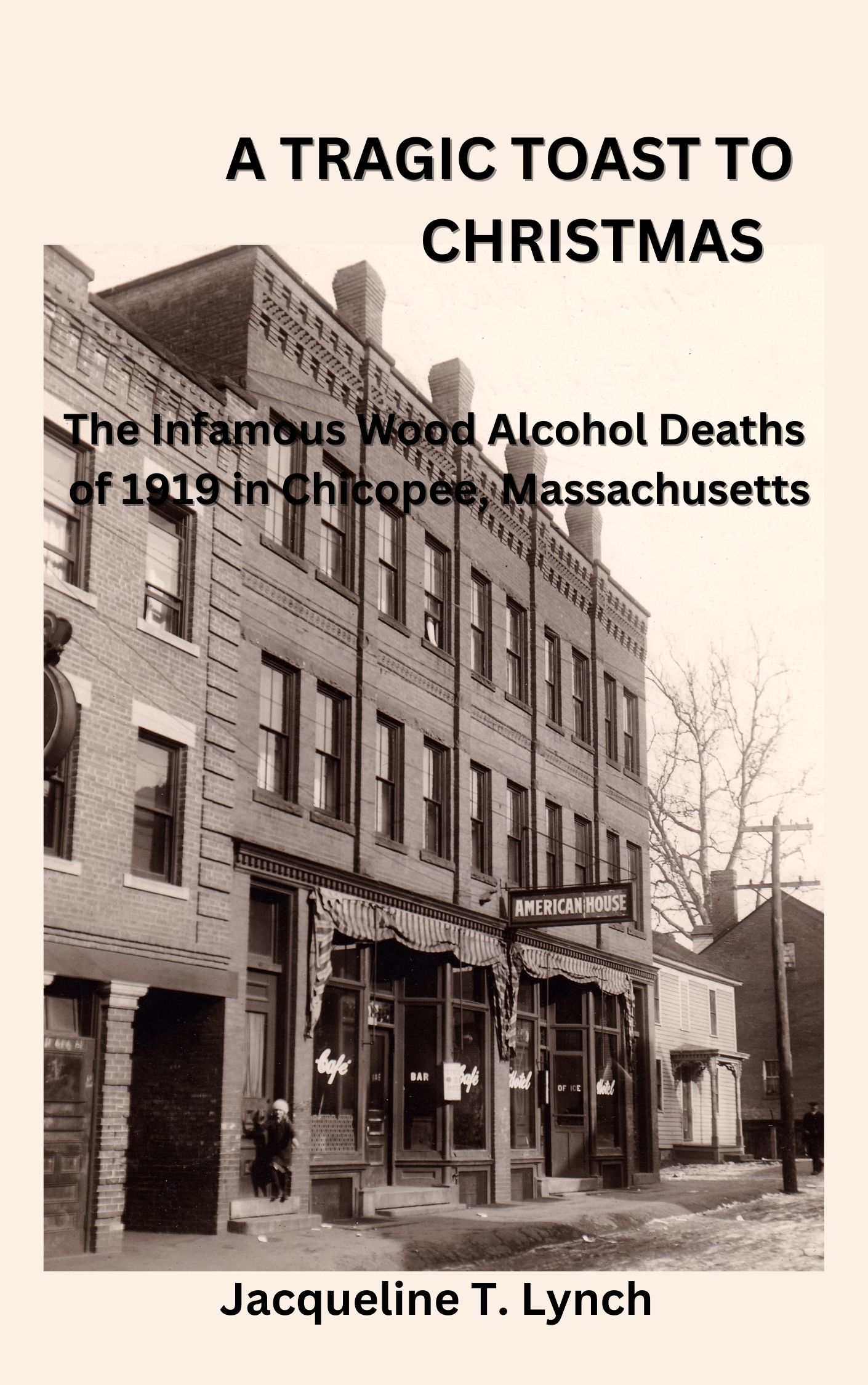
A Tragic Toast to Christmas -- The Infamous Wood Alcohol Deaths of 1919 in Chicopee, Mass.; as well as books on classic films and several novels.  Her Double V Mysteries series is set in New England in the early 1950s.  

TO JOIN HER READERS' GROUP - follow this link for a free book as a thank-you for joining.


Tuesday, September 10, 2024

World War II comes to northern Maine - CHILDREN'S WARTIME ADVENTURE NOVELS


New England locations are featured in several middle grade and young adult novels published during World War II.  My latest book, Children's Wartime Adventure Novels - The Silent Generation's Vicarious Experience of World War II explores these stories and how they inspired and indoctrinated a young generation too young to fight, but not too young to be affected by a global war. 

In the first of this three-post series, I wrote about locations in western Massachusetts -- Smith College and Mount Holyoke College -- that were settings for two books for girls on officers' training in the WAVES and Women Marines.

In the second post last week, I talked about two boys' novels that show us New London, Connecticut, locations, including the Naval Submarine Base, where young men train during World War II.

Today, in the third and last post in this three-part series, we have a look at a book for girls set in Maine that blends the war and the home front.


Carol Rogers in War Wings for Carol by Patricia O’Malley, is an administrative assistant in a regional airline in northern Maine.  The author worked for the Civil Aeronautics Association from 1938, for Transcontinental & Western Air, Inc. (TWA) and was employed by (its later incarnation) Trans World Airlines in the public relations department at the time of the book’s publication.  Ms. O’Malley brings the details of a career for young women as stewardesses and administrative staff to, in this case, a wartime setting

War Wings for Carol begins with her arrival in a rather isolated town in northern Maine where a small regional airport now shares its facilities with an Army Air Transport unit, which gives Carol and the reader a window on the mundane but very necessary non-combat military units which ferry supplies to the front.

Along with the nuts and bolts of airline administration, we are treated to Carol’s impressions of a part of the country with which she is not familiar, and the author describes New England in sometimes lyrical prose.


“The cities were built along the banks of rivers, and the rivers were lined with miles of red brick mills, chimneys belching tall columns of thick black smoke in defiance of an enemy which would reduce mankind to slavery.  For this was the heart of industrial New England, where thousands of men, women and machines had been mobilized into the unconquerable army of American production, where the wheels of democracy turned unceasingly, grinding out implements of victory.”

It is the dead of winter when she arrives on a connecting flight from Boston and Bangor.

“There were farms outside the villages, their red barns dark against the white earth.  In the distance, small hills rose against the western horizon and they flew across the icy Kennebec at Augusta, where the dome of the capitol rises in stately dignity above the very site where the men of the Massachusetts Bay Colony established the first trading post in America.”

She is to be assistant to Mr. Ingram, the Vice President of the fictional New England Airlines, and because he must travel a great deal, he leaves important duties in her lap, including the hiring and training of new air hostesses.  They are in northern Maine, close to the Canadian border, where they share the airfield with the Army Air Corps, and do some contract work for the military, carrying cargo and supplies along with its regular passengers.  Mr. Ingram hired Carol to take many details off his shoulders.  “‘It’s a big job for a girl and I thought a long time before I made up my mind to take you.  But women must shoulder men’s work, and I suppose we’ll see more of it before this thing ends.’

“After a few minutes of reflection, during which Carol sat quietly, he added, ‘And they always do it as well…or better.  It’s a sad commentary on the stronger sex, Miss Rogers, but it’s true.’” We can hope the young female readers took note of the praise.

The Army airfield is described without hyperbole:  “Two Flying Fortresses and their fighter escorts were making a spectacular showing against its backdrop. On the ground, squadrons of bombers were lining up for reconnaissance practice, and pursuit planes were waddling out of hangers into position for take-off.  Trucks, tractors, jeeps and station wagons sped in and out of the post gates.”


The small town nearby has changed with the war: “Men in uniform were everywhere.  They stood in doorways and they walked up and down, talking.  They filled the drug stores, drinking innumerable cokes and cups of hot coffee.  They jammed the movies and they patronized the shops and brought a wave of prosperity such as the little town had never known before.” Much could be said of many, many towns across the United States during the war.


Another loving passage on New England brings the story through the crisis and past a challenging winter.  “Spring in northern New England is not like spring anywhere else in the world.  She is not a hoyden here, who leaps at your throat and forces you to notice her presence.  She doesn’t hurl herself in your path.  Spring in New England is a perfect lady.  She has been taught how to enter a room and takes her time making an appearance.  She knows that winter lingers, loathe to leave the land on which he had such a long, secure hold.  But she also knows that victory is inevitably hers, so she walks softly and is gracious in her conquest.  She is all the more beautiful because of her good behavior. The snows melt, the hills turn green, the rivers break free from their bondage, and the waters sing as they carry the ice cakes down toward the sea.   The skies are washed, and crisply starched and ironed, and the chirp of the robin is heard in the early morning from the branches of trees that are giving promise of the gracious abundance which is to follow.”

Carol deals with wartime administrative problems, encounters a Nazi spy, and agonizes over one of their military supply planes lost in a winter storm somewhere over Maritime Canada.


Children's Wartime Adventure Novels is available in eBook directly from my online store here.

It is also available in eBook from Barnes & Noble, Apple, and a wide variety of online shops here.

It is also available in eBook, paperback, and hardcover from Amazon here.

******************

Jacqueline T. Lynch is the author of The Ames Manufacturing Company of Chicopee, Massachusetts - A Northern Factory Town's Perspective on the Civil War;   

Comedy and Tragedy on the Mountain: 70 Years of Summer Theatre on Mt. Tom, Holyoke, Massachusetts;

 States of Mind: New England, 

A Tragic Toast to Christmas -- The Infamous Wood Alcohol Deaths of 1919 in Chicopee, Mass.; as well as books on classic films and several novels.  Her Double V Mysteries series is set in New England in the early 1950s.  

TO JOIN HER READERS' GROUP - follow this link for a free book as a thank-you for joining.


Wednesday, September 4, 2024

New London, Connecticut, submarine school - featured in Children's Wartime Adventure Novels


New England locations are featured in several middle grade and young adult novels published during World War II.  My latest book, Children's Wartime Adventure Novels - The Silent Generation's Vicarious Experience of World War II explores these stories and how they inspired and indoctrinated a young generation too young to fight, but not too young to be affected by a global war. 

Last week, I posted on locations in western Massachusetts -- Smith College and Mount Holyoke College -- that were settings for two books for girls on officers' training in the WAVES and Women Marines.

Today we explore two young adult novels that show us New London, Connecticut, locations, including the Naval Submarine Base, where young men train during World War II.


Rig For Depth Charges!
by Captain Edward E. Hazlett begins with the Japanese attack on Pearl Harbor, with a vivid account in a book that is more realistic than other books for boys in this era.   Like the novels Lady Leatherneck by First Lieutenant Barbara A. White, MCWR and By Your Leave, Sir by Lieutenant Helen Hull Jacobs, USNR discussed here previously, Rig For Depth Charges!, a story about submarine warfare, is also penned by someone with experience in the field.  Captain Hazlett’s novel is an engrossing story, not just the documentation of the training and adventure of a young submariner, but a well-told tale about the early days of the United States’ involvement in the war and young man’s realistic experiences at home and abroad.

Capt. Hazlett served in the Navy in World War I and entered the submarine service in the 1920s.  More than sixteen years of his thirty years of active duty were spent in the Silent Service.  

Some of his most important writing, however, might be considered to be his longtime correspondence with his boyhood pal, Dwight D. Eisenhower.  He and Eisenhower grew up in Abilene, Kansas, attended high school together, and both studied to enter military academies as a way to obtain a college degree when their parents were too poor to send them to civilian colleges.  Turns of fate brought Hazlett to the Naval Academy and Eisenhower to West Point. 

Hazlett is mentioned in Ike’s memoirs, and their correspondence over the years was an outlet for President Eisenhower to reveal his thoughts on many national and international issues.  Capt. Hazlett died in 1958 and President Eisenhower attended his funeral and internment at Arlington National Cemetery.  Hazlett’s widow later donated Capt. Hazlett’s papers, including the correspondence with Ike, to the Dwight D. Eisenhower presidential library in Abilene, Kansas.  They are referenced in Ike’s Letters to a Friend 1941-1958.


Hazlett's story for boys follows young Robert "Saint" Rodney, a new naval officer who, after experiencing the horror of the Pearl Harbor attack, decides to enter the submarine service, and heads for New London, Connecticut.  He and his classmates will spend long hours at their books, with periods of practical work in the operation of subs in Long Island Sound.  In their free time, they look forward to dates with coeds at nearby (real-life) Connecticut College for Women (now co-educational Connecticut College), competing with Coast Guard cadets at the Coast Guard Academy.  Joan Underwood, a journalism student, catches his eye and will become his newest girlfriend. The colonial coastal town of New London is described, including the Hotel Mohican, one of the finest hotels in Connecticut at the time, where they enjoy meals in the restaurant, and the “sleepy little village” of Groton, and sometimes hike to Norwich.  


The Hotel Mohican, built in on State Street in New London in 1896, was originally a publishing house for a magazine, but was converted to a hotel two years later.  It was one of the grandest hotels in the state.  In the 1990s, the building was converted again into apartments.

Their first tour of a sub is described and the young readers get a wealth of detail in its appearance and manner of operation.  “The party moved on into the incessant din of the engine room.  The ship had taken on a gentle heave, indicating that she had now passed out of the river and into the glassy swells sweeping in from the Atlantic.  An odor of combined exhaust fumes, bilge water and fuel oil assailed the nostrils.” They learn of water-tight hatches and valves, and the real-life Squalus disaster in 1939 is recalled when twenty-six of its crew drowned instantly when induction values failed.  (The rest of the crew, thirty-three, were rescued from the trapped sub in a mission headed by Lt. Commander Charles Momsen, for whom the Momsen lung was named).

They are introduced to the escape tank on base, a large silo that will be flooded with water, and in which they will learn to use the Momsen lung and avoid getting the “bends” under full pressure.  We will also see March Anson in March Anson and Scoot Bailey of the U.S. Navy have his turn struggling with the lessons in the tank, where some young officer students panic and some show their mettle. 

March Anson and Scoot Bailey of the U. S. Navy by Gregory Duncan, is the story of two friends who join different branches of the Navy: Scoot becomes a Navy flier, and March heads for training at the sub school.


We follow March Anson on his train ride to New London, Connecticut.  March meets other sailors, a petty officer, a radioman, and a pharmacist, all going to the sub base.  They discuss their enthusiasm for joining the subs, what they feel is the toughest branch of service.

They are awed by the escape tower on which they will be tested, the huge water tank we first experienced in Rig for Depth Charges!  There is the mundane description of March’s settling in – officer quarters for unmarried officers – those with wives along could live in town – and the mess. Standards are high for submarine service as there are not as many openings.  “What they looked for in the ‘Diving Navy’ was the kind of man who was brave, cool under fire, far above average intelligence, with the ability to get along well with other people under all circumstances, and the kind of nerves that didn’t crack or even show strain under the greatest danger, the worst crowding, or seeming fatal situations.”

These books for boys written during World War II were a window on a world of adventure and opportunity for the young readers; and for us, a window on a world on fire as it looked to American children whose fathers and older brothers were gone to war.

Next week, I'll post on War Wings for Carol, a book that is set on an airfield in northern Maine that is shared by a small commercial airline and the military. One young woman's  home front job supports the U.S. war effort in more ways than one, and descriptions of small-town Maine are delightful.


Children's Wartime Adventure Novels is available in eBook directly from my online store here.

It is also available in eBook from Barnes & Noble, Apple, and a wide variety of online shops here.

It is also available in eBook, paperback, and hardcover from Amazon here.

******************

Jacqueline T. Lynch is the author of The Ames Manufacturing Company of Chicopee, Massachusetts - A Northern Factory Town's Perspective on the Civil War;   

Comedy and Tragedy on the Mountain: 70 Years of Summer Theatre on Mt. Tom, Holyoke, Massachusetts;

 States of Mind: New England, 

A Tragic Toast to Christmas -- The Infamous Wood Alcohol Deaths of 1919 in Chicopee, Mass.; as well as books on classic films and several novels.  Her Double V Mysteries series is set in New England in the early 1950s.  

TO JOIN HER READERS' GROUP - follow this link for a free book as a thank-you for joining.


Monday, August 26, 2024

Western Mass locations in my new book CHILDREN'S WARTIME ADVENTURE NOVELS

New England locations are featured in several middle grade and young adult novels published during World War II.  My latest book, Children's Wartime Adventure Novels - The Silent Generation's Vicarious Experience of World War II explores these stories and how they inspired and indoctrinated a young generation too young to fight, but not too young to be affected by a global war. 

Three of the books covered have ties to western Massachusetts.  One, By Your Leave, Sir, by Lt. (j.g.) Hellen Hull Jacobs describes the Navy training of the first WAVES at Smith College in Northampton.  That book, and its locales of the college and of Hotel Northampton where the first female officers were billeted, I've already discussed here in this previous post.

A similar experience awaited another young woman just across the river from Northampton in the western Massachusetts town of South Hadley, where Mount Holyoke College, another women’s college, was the site of training for WAVES as well as for women Marines. The character of Priscilla Warner has chosen to become a Marine.

Lady Leatherneck was written by First Lieutenant Barbara A. White, MCWR (1921-2000), who graduated from Bates College, Lewiston, Maine, and taught for six months before joining the Women Marines, among the first to enlist.  At the time of her book’s publication, she was stationed at Parris Island, South Carolina, an adjutant of “a large men’s battalion.”  She later married fellow Marine officer Howe Morris and returned to her teaching career after the war, obtaining master’s degrees from Boston University and the University of Southern Maine.

Lady Leatherneck is similar to By Your Leave, Sir, in that the author is herself a woman in the service, in this case, the Marine Corps Women’s Reserve, and also is based on the author’s own real-life experiences.  


First group of Women Marine Officer Candidates, Mt. Holyoke College - 1943 (USMC photo)  


Unlike the character of Becky of By Your Leave, Sir, who is a Southerner adjusting to a New England winter, the protagonist in Lady Leatherneck (the term “leatherneck” is an old slang word for a Marine), Priscilla Warner, is a native Bostonian, and Massachusetts is home, and a place she longs to return when the war is over. She’s on familiar ground.

Priscilla is a recent college graduate and has spent the last few months teaching, and lives with her widowed mother.  Her older brother, Steve, a Marine, was captured by the Japanese after the fall of Bataan in the Philippines, and it has been several months since she and her mother have had any word of him.

Walking through the streets of Boston, Priscilla spots a recruiting office and is inspired to join not only by her brother’s sacrifice but of boys she knew in college who were reported wounded or killed.

Priscilla must go through interviews, physical exams, and a great deal of soul-searching.  Her mother wonders what the future will be for her in the Marines, especially in light of giving up a good teaching job.


She wants to replace a man for combat, in this case, replacing her brother Steve in the prison camp.  Her training period is to last two months at Mount Holyoke College, and like the WAVES and the WACs (Women's Army Corps), they will perform duties as typists, stenographers, telephone operators, bakers and cooks, and a variety of other administrative and technical support tasks.

She is sworn in, and for the next month, concludes her teaching job and waits for orders.  Finally, she takes the train a just little way west to the Connecticut River Valley and South Hadley, where she will receive her training at Mount Holyoke College, like Smith College, one of the preeminent women’s colleges in the country.  She meets her fellow officer candidates, and, like By Your Leave, Sir, much of her Marine experience seems to have a sorority-like aspect.

More tests, and classes, and learning to call a floor a “deck,” stairs a “ladder,” and the bathroom the “head.”  Her platoon trains with a group of WAVES and she is confounded as the Navy cadence is different from the Marine Corps.  They have a course in aircraft recognition.  The training experience in this novel, however, is given short shrift in comparison to the detailed experience in By Your Leave, Sir.  Priscilla receives her commission and is posted to Camp Lejeune, North Carolina.  There she will find romance and adventure there and at other bases in California.

Another tie to western Massachusetts is the author Dorothy Deming, R.N. (1893-1972), who wrote Penny Marsh and Ginger Lee, Wartime Nurses, which she dedicated “To The Army Nurses of Bataan.”  

Ms. Deming earned her Bachelor of Arts degree at Vassar College in 1914; and graduated from the Presbyterian Hospital School of Nursing in New York City in 1920.  She became the director of the Holyoke, Massachusetts, Visiting Nurse Association in 1924, and wrote extensively on nursing, both non-fiction and fiction.  Her books for girls were a window into the career of nursing, and her most popular series was the Penny Marsh series.

Penny Marsh and Ginger Lee, Wartime Nurses follows the civilian and military nursing of the two main characters.  Interestingly, the book alternates chapters between the two friends: one chapter to Ginger Lee, and the next to Penny Marsh.  Each tells a different aspect of wartime nurses.  Ginger is an Army nurse serving overseas, and Penny nurses on the home front.

Next week, I'll post on two boys' adventure books that visit the submarine base at New London, Connecticut.

Children's Wartime Adventure Novels is available in eBook directly from my online store here.

It is also available in eBook from Barnes & Noble, Apple, and a wide variety of online shops here.

It is also available in eBook, paperback, and hardcover from Amazon here.

******************

Jacqueline T. Lynch is the author of The Ames Manufacturing Company of Chicopee, Massachusetts - A Northern Factory Town's Perspective on the Civil War;   

Comedy and Tragedy on the Mountain: 70 Years of Summer Theatre on Mt. Tom, Holyoke, Massachusetts;

 States of Mind: New England, 

A Tragic Toast to Christmas -- The Infamous Wood Alcohol Deaths of 1919 in Chicopee, Mass.; as well as books on classic films and several novels.  Her Double V Mysteries series is set in New England in the early 1950s.  

TO JOIN HER READERS' GROUP - follow this link for a free book as a thank-you for joining.


Monday, February 12, 2024

A Tragic Toast to Christmas - wood alcohol deaths of 1919 in Chicopee, Mass.


More than 100 people died of a companionable drink in several towns and cities in New England on Christmas Eve and Christmas Day 1919, nearly half of them in the city of Chicopee, Massachusetts. How this came to happen, and even how it came to be forgotten are both intriguing aspects to the tragedy.


The story of the grisly incident of unknowingly ingesting poisonous wood alcohol and how it played out in one New England city might stand as a microcosm of the conflict created between the legal production and sale of alcohol, those who would prohibit it, and those who would do anything to profit from it, not only in the years up to 1919, but in the tumultuous decade that followed.


Now Available