On Thursday’s “Another Old Movie Blog” post we’ll have a look at “Life with Father” (1947), a film from the stage play of the same name. That play was, at the time, the longest running show on Broadway. It had its premiere at the Lakewood Theater in Skowhegan, Maine.
Since 1967 the officially declared “Maine’s State Theater”, is one of the oldest summer theaters in the country, first offering summer stock in 1901. The tourists and resident summer colony of Lake Wesserunsett would be forever changed, particularly in Lakewood’s golden years from 1925 through 1941.
Some actors and actresses who’ve trod the boards there include Mary Astor, Betty White, Milton Berle, Carol Channing, Lana Turner, Gloria Swanson, Mickey Rooney, Myrna Loy, Patty Duke, Van Johnson, Hume Cronyn, Jessica Tandy, Lillian Gish, Rita Moreno, and Humphrey Bogart.
A New York Times review from July 1935, the premiere of “Remember the Day” with Frankie Thomas in the lead, Keenan Wynn in a supporting role, noted that the audience members included Humphrey Bogart. John Drew Devereaux and his mother, cousins to the famous Barrymore family, were also in attendance.
The 1939 premiere of “Life with Father” included Howard Lindsay, Dorothy Stickney, and a young Teresa Wright. John Drew Devereaux played Clarence, Jr. opposite her.
For the coming 2011 summer season at the Lakewood Theater, have a look at this website. For more on its history, have a look here.
Tuesday, April 19, 2011
Lakewood Theater - Skowhegan, Maine

Tuesday, April 12, 2011
News of the Lincoln Assassanation
Back from the Northern Kentucky University Y.E.S. new play festival, where my suspense drama "One Good Turn" premiered. My gratitude and admiration goes to director Sandra Forman, and her terrific cast: Harli Cooper, Katie Berger, Caity Shipp, Seth Wallen, Stephanie Wallenfelsz, Jinkju Lim, Rex Martinez, Simon Powell, Lauren Hayes, and Hayley Powell. It was a great experience.
Now, back to New England, but with still a bit of a connection to the rest of the country -- and always a connection to the past -- as we remember the assassanation of President Abraham Lincoln this week. The President was shot April 14, 1865, on Good Friday. Below, we have the front page of the Springfield, Massachusetts Daily Union from the next day, April 15th, with the distressing news hot off the telegraph wires. The columns are edged in black, a custom at that time to indicate mourning over a death.

Springfield had a connection with the events of that tragic day through laywer George Ashmun, a friend of Abraham Lincoln. Mr. Ashmun was in Washington City that day and wanted to bring an associate to meet with Mr. Lincoln that evening. He asked Lincoln to cancel his evening at Ford's Theater. Lincoln decided to keep his plans to attend the play that night, but wrote a note for his staff:
"Allow Mr. Ashmun and friend to come in at 9 a.m. tomorrow."
We believe this was the last words Lincoln ever wrote. That night, John Wilkes Booth pulled the trigger.
Springfield, just as in many communities in New England and across the north, closed stores and businesses, and church bells sounded a requiem. At the Springfield Armory, an 18-gun salute was fired at sunrise, and then a 36-gun salute was fired at sunset.
Tuesday, March 29, 2011
Intermission
This is to announce that this blog will be going on hiatus for a couple of weeks. I’ll still respond to comments for a few days, but I’ve got some other work to tend to, and I’ll be back with a new post on Tuesday, Monday, April 12th.
A play of mine called “One Good Turn” was chosen as a winner in the Northern Kentucky University Y.E.S. Festival of Plays, so if any readers down in the Cincinnati area have some free time the weekend of April 9th through 10th, this and two other winning plays, one by Kelly Kingston Strayer, and one by Karla Jennings, will premiere. Maybe I'll see you there. The festival runs through April 17th.
Tuesday, March 22, 2011
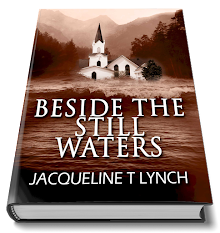
Beside the Still Waters - A novel on the creation of the Quabbin Reservoir

Tuesday, March 15, 2011
Cadmium Yellow, Blood Red

Here’s the story:
A post-World War II “cozy” mystery about a museum heist, a missing child, a murder, a recent ex-con and an even more recent widow.
In Hartford, Connecticut, 1949, Juliet Van Allen, a museum administrator, discovers that her artist husband is having an affair with another woman. Just a wee bit shocked, Juliet slips unseen back to her office to mull over her options and wish the earth would swallow her, when she meets an intruder. Elmer Vartanian, recently released from prison for a museum robbery, is coerced into helping scout the museum for a heist by a gang that has kidnapped his daughter. When her husband is found murdered, Juliet becomes the prime suspect, and Elmer is her only alibi.
Juliet, the rebellious only daughter of a wealthy financier, and Elmer, a lower-class ex-convict who has educated himself in prison, must partner to solve their separate crises. She is Elmer’s guide to a post-war world that has changed so much since he entered prison. He feels guilty for having missed his daughter’s childhood, for being safe when friends were killed in World War II, and is bewildered over atomic energy, Modern Art, ballpoint pens, and frozen orange juice concentrate.
Juliet is not sure she believes Elmer’s story. Elmer is not sure she didn’t kill her husband, yet they are compelled to work together, dogged by the scandal-monger newsman, the shrewd police detective, and scrutinized by the even more judgmental eye of Hartford’s elite in world where Modern Art meets old-fashioned murder.
The novel is offered for a limited time only at 99 cents.
However, I will offer the book free for the next month to any blogger willing to review the book (Or just give it a mention and a link. I’m not fussy.) on his/her blog. Just email me at: JacquelineTLynch@gmail.com with your blogsite url, and I will email you back with the special coupon code to download “Cadmium Yellow, Blood Red” FREE from Smashwords.com.
Note, on the Smashwords site you can download the book in any format that can be read by Kindle, Sony, Nook, any other kind of e-readers, and can also be downloaded to be read right on your computer. You do not need an e-reader.
When purchasing an ebook from Amazon, also note that you can download the Kindle program to your computer, so you can read books on your computer.
Tuesday, March 8, 2011
First Church (Center Church) of Hartford, Connecticut

Life is often both dignified and comical at the same time. While I would not suggest that the small church pictured here is funny, dwarfed as it is by a larger glass and steel office building, but one may smile all the same at the stubborn refusal of the outdated past to shirk away from the bold and brassy present. I would not call the modern structure “the future”, because it may not be standing in the future. The church however, I would certainly bet on.
It’s already been standing since 1807.
The First Church, or Center Church, of Hartford, Connecticut holds a long and respected place in Connecticut history. It’s first pastor was Thomas Hooker, who when trudging off into the New England Wilderness after a dispute with John Winthrop, Governor of the Massachusetts Bay Colony, founded Hartford on the Connecticut River in 1636.
In the past 375 years, four buildings have served the congregation. The first was a log building where the Old Statehouse stands today. The third structure, built in 1739, stood where the present church stands today. The present meeting house has stood here since 1807, (at the dedication, the congregation was treated to the first performance in Hartford of the “Hallelujah!” chorus from Handel’s Messiah.)
A church welcoming of other faiths, it allowed the first Roman Catholic Mass in Hartford to be celebrated in this building in 1813.
With a few additions and renovations in the last couple of hundred years, the meeting house has weathered a far greater test of time than the shadows thrown from taller, newer buildings.
The bell in the steeple was cast in England in 1633. It still rings out on Main Street.
For more on the First Church or Center Church of Hartford, have a look at this website.
Tuesday, March 1, 2011
Vintage Radio & Communications Museum of Connecticut

The Vintage Radio & Communications Museum of Connecticut showcases our march through time in the noisy 20th Century with a fantastic collection of technology that gave us what we wanted, and made us who we were. Then, and now.


We seem to trace our own lives, and the lives of at least three generations of our families, when we visit here. Have a look at the website for more information.